
Description
Products Description:
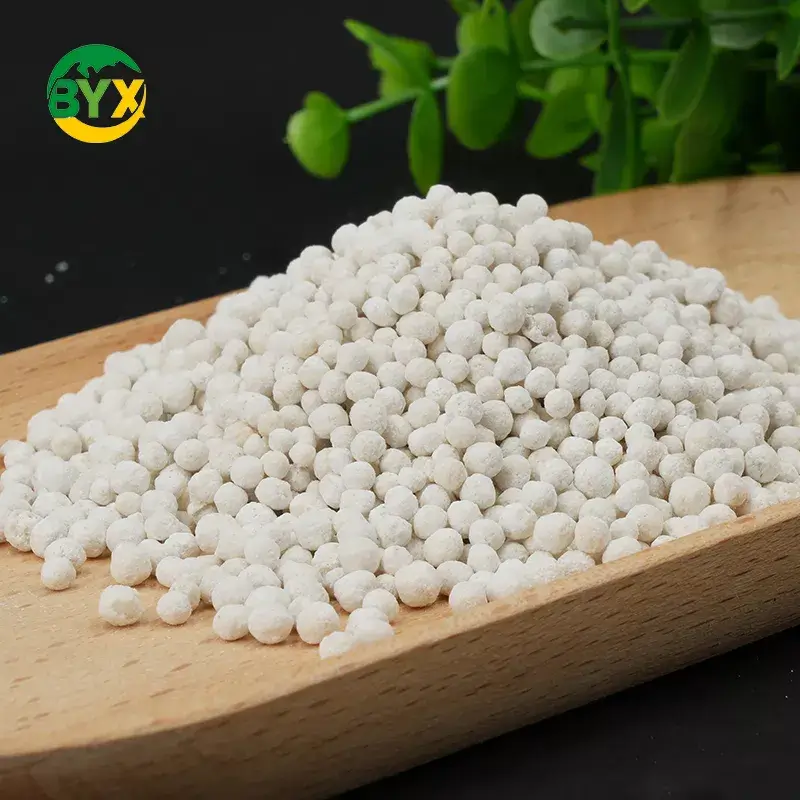
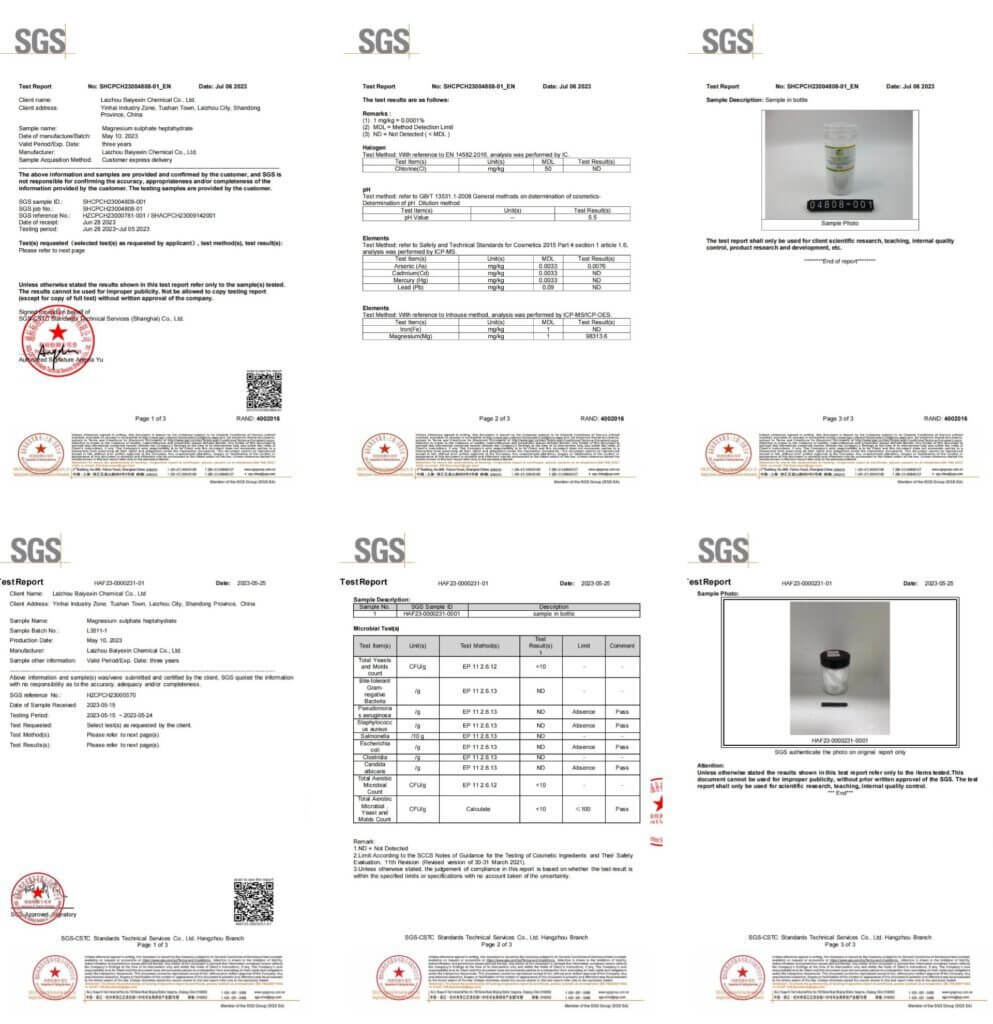
Kieserite Fertilizer Granules Examining Report:
PACKING: 25kg/50kg/1000kg/1250kg
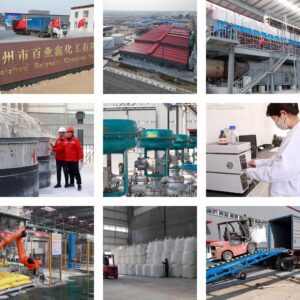
Factory Picture:
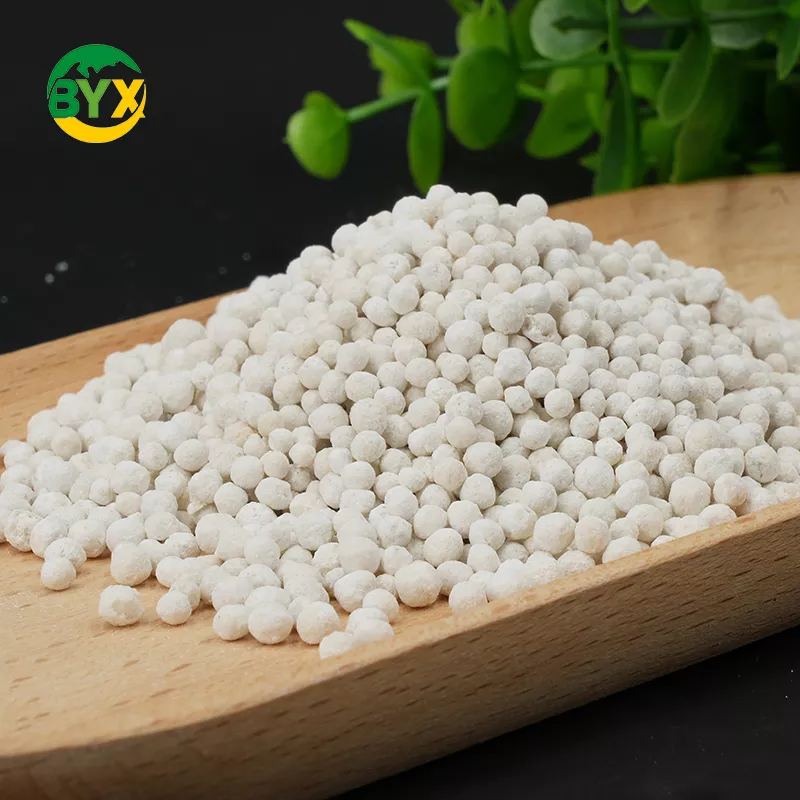
The global agricultural production system depends on kieserite fertilizer granules which function as an effective medium that delivers trace element nutrients to crops. The product provides rapid magnesium (Mg) and sulfur (S) solutions for soil and crop needs which results in plant health improvements and increased crop production capacity. The article presents a detailed study of kieserite fertilizer granules which includes basic information and operational mechanisms and application procedures and safety measures and manufacturing methods and product categorization and fertilizer comparison and market purchasing rules and packaging requirements and company benefits and particular use cases and research developments and frequently asked questions (FAQs). The article helps readers understand how to scientifically use Laizhou Baiyexin kieserite fertilizer granules which function as a leading green fertilizer product through its focus on product characteristics and application benefits.
Key Takeaways
- Kieserite fertilizer granules helps plants grow better by giving magnesium and sulfur.
- The product improves soil health which enables roots to develop and absorb essential nutrients.
- Farmers can use Kieserite fertilizer granules on many crops like grains, fruits, and others.
- Testing soil before using Kieserite helps give plants the right nutrients.
- BAIYEXIN’s Kieserite product allows farmers to customize their product requirements.
I. Basic Information: Core Properties and Classification of Kieserite Fertilizer Granules
TheDefinitionandNomenclatureSystem
1.Chinese Names: Kieserite Fertilizer
English Names: Kieserite Fertilizer,Magnesium Sulphate Fertilizer,Epsom Salt Fertilizer
Common Aliases: Kieserite Fertilizer Granules Agricultural-grade Epsom Salt Sulfur-Magnesium Compound Fertilizer Water-Soluble Magnesium Fertilizer Agricultural-grade Magnesium Sulfate Fertilizer Magnesium Sulfate Trace Element Fertilizer Food-grade Magnesium Sulfate Fertilizer if applicable for fertilizer use Fertilizer-grade Magnesium Sulfate Fertilizer Crystalline Magnesium Sulfate Fertilizer Magnesium Sulfate Fertilizer Powder Liquid Magnesium Sulfate Fertilizer Granular Magnesium Sulfate Fertilizer Water-Soluble Magnesium Sulfate Fertilizer Chelated Magnesium Sulfate Fertilizer Compound Magnesium Sulfate Fertilizer.
2.The Key Physicochemical Properties of Kieserite Fertilizer Granules
The CAS Numbers for Kieserite Fertilizer Granules are as follows:
Monohydrate/Anhydrous. White powder/fine crystals Whiteis the color
Monohydrate. 22.5% and above
Anhydrous. 26.6% and above
Magnesium Content:
Monohydrate. Mg 17.2%andabove S 22.5%andabove
Anhydrous. Mg 19.6%andabove S 26.6%andabove
GST Rates:12% in India preferential rate for agricultural products 5% in Pakistan 16% in Kenya adjusted according to local agricultural policies
Kieserite Fertilizer Granules Solubility:The substance dissolves easily in water while it has limited solubility in ethanol and glycerol and ether but it does not dissolve at all in acetone
Kieserite Fertilizer Granules Hygroscopicity: The magnesium sulfate heptahydrate substance shows high hygroscopicity which causes it to form caked material during its storage while the monohydrate and anhydrous magnesium sulfate substances exhibit better storage stability and lower hygroscopicity.The material maintains its structure at room temperature, but anhydrous and monohydrate forms establish high stability because they do not form caking under relative humidity conditions below 70%. The heptahydrate material shows high hygroscopicity which causes it to form caked material when humidity levels exceed 60%
Kieserite Fertilizer Granules pH Value: 5.0-7.0
3.Core Components and Fertilizer Classification
The classification of kieserite fertilizer granules identifies them as medium and trace element fertilizers. It delivers two essential nutrients magnesium and sulfur which single-element fertilizers which contain only one nutrient cannot provide. The product functions as an extra fertilizer because it contains N P K as the main nutrients. This characteristic gives it an irreplaceable role in balanced fertilization systems.
| Fertilizer Type | Core Differences | Applicable Scenarios |
|---|---|---|
| Zinc-sulfate single-element | The system contains only a single nutrient. | Soils that have only one nutrient deficiency. |
| NPK compound | The system primarily contains macro-elements and uses medium elements and trace elements as additional resources. | Crops need total nutrient supply throughout their growth development stages. |
| Magnesium sulfate fertilizer | The product provides magnesium and sulfur because it contains high water solubility. | Emergency topdressing applies to soils that lack magnesium and sulfur. |
| Hydration State | Mg Content | Hygroscopicity | Dissolution Rate | Applicable Application Methods | Cost (RMB/ton) |
|---|---|---|---|---|---|
| Magnesium sulfate heptahydrate | 0.098 | Strong | Medium | Base dressage of soil, application with fertilizer | 500-700 |
| Magnesium sulfate monohydrate | 0.172 | Moderate | Fast | Through the usage of granulated raw material, the irrigation via drips | 1500-2500 |
| Anhydrous magnesium sulfate | 0.196 | Relatively strong | Extremely fast | Foliar spraying, formulation of liquid fertilizer. | 1800-2800 |
II. Role and Efficiency of Kieserite Fertilizer Granules: In Relation with Crop Physiology up to Actual Yield Improvement.
1. Core Functions: Addressing Primary Issues in Crop Growth
Nutrient Supplementation: Magnesium plays a vital role in chlorophyll production because it constitutes 2.7% of chlorophyll molecular weight while restoring "interveinal chlorosis" which first shows symptoms on older leaves. Sulfur enables protein production while it helps crops recover from "stunted plant growth and leaf chlorosis" problems.
Physiological Regulation: The process activates more than 300 enzymes which include phosphokinase while it speeds up carbohydrate movement through the system. The system improves photosynthesis results by raising leaf photosynthesis capacity between 20% and 30%.
Stress Resistance Enhancement: The system boosts crop drought resistance through its ability to increase root water intake while it also enhances disease protection by decreasing potato late blight occurrence between 15% and 20%.
2. Indirect Auxiliary Effects: Improving Both Quality and Yield
Yield Improvement: The application of kieserite fertilizer granules at a rate of 15 kilograms per mu to sugarcane fields results in a yield increase between 10 percent and 12 percent. The application of 1 percent kieserite fertilizer granules solution to grapes during their flowering period leads to an 18 percent increase in fruit set rate.
Fertilizer Synergy: When nitrogen and phosphorus fertilizers are applied together with the nitrogen and phosphorus fertilizers their absorption rate increases by 15 to 20 percent which leads to decreased nutrient losses.
3. Suitable crops and soils for Kieserite Fertilizer Granules
Applicable crops:
Suitable Soil Types:
Soils with Long-term High-concentration Compound Fertilizer Application: Balance nutrients and prevent magnesium imbalance.
4. Kieserite Fertilizer Granules Improving Nutrient Deficiency Symptoms
Magnesium Deficiency Symptoms: Chlorosis appears between the veins of old leaves while reticular veins and leaf necrosis occur in severe cases.
Sulfur Deficiency Symptoms: The plants show stunted growth while their leaves develop curls and brittleness and their flowering stage begins later than normal.
- Cotton plants develop chlorosis between their leaf veins because they lack sufficient magnesium but their veins remain green.
- Rice plants develop a yellow appearance while their height remains unchanged and their middle and lower leaves droop downward with interveinal chlorosis.
- Potato plants display brittle lower leaves which curl toward the leaf surface while old leaves develop chlorotic leaf edges.
- Rapid Supplementation: The leaves absorb magnesium from foliar sprays within 1-2 hours and the chlorotic areas start to turn green after 2-3 days.
- Soil Remediation: The base application of magnesium sulfate decreases aluminum toxicity in acidic soils while exchangeable magnesium levels rise above 50mg/kg which is the appropriate threshold.
III. Applications of Kieserite Fertilizer Granules, under different Agroconditions.
1. Kieserite Fertilizer Granules Application Methods
- Base Fertilizer: Before plowing work begins farmers should apply 10 to 15 kilograms of kieserite fertilizer granules per mu which they must combine with organic fertilizer for spreading purposes.
- Topdressing: During the growing season farmers should apply 10 to 13 kilograms of kieserite fertilizer granules per mu through fertigation while they should use 250 to 500 grams of the fertilizer for each fruit tree.
- Foliar Spraying: For fruit trees the solution should be used at 0.5 to 1percent concentration while vegetables need 0.2 to 0.5percent solution and food crops require 0.3 to 0.8percent solution; farmers should apply 50 to 150 kilograms of solution per mu with 7 to 10 days between applications.
- Drip Irrigation Fertilization: The system dissolves material through irrigation systems which farmers can use for high-value crops that include greenhouse vegetables and strawberries.
2. Duration and Rates of Application of Kieserite Fertilizer Granules
- Lawns: Apply 5-8kg of kieserite fertilizer granules per mu during the growing period, via fertigation.
- Betel Nut: Apply 200-300g of kieserite fertilizer granules per tree during the fruiting period, mixed with organic fertilizer.
- Sugarcane: Apply 15-20kg of kieserite fertilizer granules per mu during the tillering stage as base fertilizer.
- Food Crops: Apply 8-10kg of kieserite fertilizer granules per mu during the seedling stage as topdressing.
- Cash Crops: Apply 12-15kg of kieserite fertilizer granules per mu during the flowering and fruiting period, supplemented with foliar spraying.
- Fruits and Vegetables: Apply 10-13kg of kieserite fertilizer granules per mu during the fruiting period, combined with foliar spraying.
3. Dilution and Application Rates for Kieserite Fertilizer Granules.
- Foliar Spraying: The solution should be diluted 1000-1500 times and applied once every 7-14 days while severe nutrient deficiency requires an 800-1200 time dilution for application every 7-10 days.
- Soil Irrigation: The solution should be diluted 800-1200 times and applied for irrigation every 7-14 days.
4. Precautions
- Compatibility: The combination of phosphorus fertilizers with alkaline fertilizers should be avoided because it creates a risk of precipitation and decreases fertilizer effectiveness.
- Application Timing: The product should be sprayed during sunny days at morning and evening times while high temperatures are to be avoided; base fertilizer should be applied before plowing and topdressing should be done at the beginning of the day.
5. Application Cases: Betel Nut and Tea
- Betel Nut Orchards: Adult trees during flowering should receive a 0.8% kieserite fertilizer granules solution combined with 1kg/tree base application which decreases fruit drop rate by 22% and increases tree yield by 15%.
- Tea Gardens: The application of 0.2% kieserite fertilizer granules through fertigation should occur before spring tea which results in an 8% increase of tea amino acid content and a 5% decrease of tea polyphenol content that improves taste.
IV. Precautions for the safe and efficient use of Kieserite fertilizer granules.
1. Compatibility Taboos
- Phosphates (superphosphate, potassium dihydrogen phosphate): Form magnesium phosphate precipitates, reducing fertilizer efficiency.
- Strongly Alkaline Pesticides (Bordeaux mixture, lime-sulfur mixture): Destroy pesticide structure and cause phytotoxicity.
- High-concentration Calcium Fertilizers (calcium nitrate): The substances compete for absorption which results in 30% reduced magnesium absorption.
- The procedure requires people to perform "dilute first, then mix" operations in that order.
- The product must be used immediately after mixing because storing it for extended periods will result in precipitation and decreased efficacy.
- A small-scale test must take place before the first mixing process to confirm that precipitation and efficacy reduction do not occur.
- The product can achieve better results when mixed with nitrogen and potassium fertilizers.
2. Hazards of Over-application and Remedies
-
Hazard Manifestations:
- Crops show root browning and leaf edge scorching which leads to seedling burning.
- Soil has an electrical conductivity EC value that exceeds 2.5 millisiemens per centimeter which indicates soil salinization and causes damage to its aggregate structure.
-
Methods to Judge Over-application:
- Crop Performance: New leaf yellowing and growth stagnation and root browning.
- Soil Testing: Soil EC value exceeds 2.5 mS/cm or the soil contains excessive exchangeable magnesium content.
-
Remedial Measures:
- Stop applying magnesium-containing fertilizers.
- The process of leaching soil requires the application of large water volumes which range from 50 to 80 cubic meters for each mu of land.
- The application of organic fertilizer at a rate of 1000 kilograms per mu or bio-fertilizer will enhance the soil structure.
- The application of 0.3% amino acid solution on leaves helps to reduce stress in crops.
3. Storage Requisites for Kieserite Fertilizer Granules
The following points should be noted for storing kieserite fertilizer granules:
- Environment Control: Temperature <30℃ and relative humidity <60% and well-ventilated and dry conditions.
- Packaging: The sealed packaging must protect against moisture absorption and caking.
- Avoid Heat and Sunlight: The product must be kept away from heat sources and direct sunlight to maintain its crystal water.
- Classified Storage: The product must be stored in a separate area that exists away from both fertilizers and pesticides.
- Transportation: The product must be protected from rain and severe impact throughout its transportation process.
Optimal Matching Schemes
- Organic Fertilizers: Applying fertilizers together with various organic materials results better magnesium absorption while improving soil structural integrity.
- Nitrogen and Potassium Fertilizers: The system achieves effective balanced fertilization through the combination of urea with potassium sulfate and other fertilizers.
- Trace Element Fertilizers: The application of trace element fertilizers with zinc and boron creates combined effects.
V. Kieserite Fertilizer Granules Production Process: Quality Control from Raw Materials to End Product
Detail on classes of spectra and their purpose
(1) Natural Bittern Extraction Method
- Raw Material: Bittern after seawater salt production (containing 8%-12% MgSO₄).
- Steps:
- Purifiction: Halt the contamination of foreign element(Fe2+and Ca2+) by decoctioning lime dilution and adjusting the pH of upto 9.0-9.5.
- Concentration: A multi-effect evaporation (with temperatures of 60-70℃, -0.08MPa under vacuum condition).
- Crystallization: Magnesium sulfate heptahydrate occurs in temperature less than 32.4° C while magnesium sulfate monohydrate develops between 32. 4° C and 100° C.
- Drying: This is accomplished using air drying with a drying chamber (temperature 80-90℃, limiting moisture content level to less than 1%).
- Advantages: Natural raw materials, low cost, purity up to 99.5% or higher.
(2) Obtaining High-purity Magnesium Sulfate (MgSO4) Using Sulfuric Acid (H2SO4) (The Core Process of Laizhou Baiyexin)
- Ingridients: Magnesite (the purity of MgCO₃ is above 90%) and commercial sulfuric acid (the purity of H₂SO₄ is higher than 98%).
- Conditions of the reaction: The temperature is held at 50-60℃, the time over which a reaction occurs is 2-3 hours, the pH is regulated and maintained between the values 5.5 and 6.0.
- Output product: According to Laizhou Baiyexin it is at least 99.5% pure and is applied in durable artificial resins for the preparation of foliar-sprays especially in industries engaged in food process.
(3) By-Product up-cycling (Perforations of Nature Conservation and Resilience Folding to Waste Minimization)
- Initial Material: Waste derived from boron containing raw materials - borax industry (25 - 30% of sulfate from carrakashy deposits).
- Form: characterized by high production costs, acceptable structural composition of Mg mineral and a low content of impurities including heavy metals (up to 0.001 %); applicable in fertilization of lawns.
VI. Classification and Characteristics
Classification by Purity and Purpose
Typically 95-98% refined Granulated Agricultural-grade Kieserite Fertilizer Granules: This type of fertilizer is the most used due to its efficiency with regards to the costs incurred and can be used for many crops and soil types. The rest of them are much less notable and contain:
Granulated Industrial-grade Kieserite Fertilizer Granules: 90-95% pure for use in forest areas and fertilization of large expanses of lawns. It costs a bit cheap and at the same time there is a restriction of heavy metal content in its landscaping use.
Classification by Physical Form
Crystalline Kieserite Fertilizer Granules: Needle like or columnar forms of magnesium sulfate heptahydrate, fluidity adequate for granules. It is applied to the soil as a base fertilizer, moderate in absorption of moisture; must be kept in dry and cool places.
Liquid Kieserite Fertilizer Granules:This type of Kieserite Fertilizer is supplied as a concentrated aqueous solution of 10 %-30 % concentration, which is ready for use in drip irrigation systems or foliar applications. It provides minimal difficulty in application and is effective in short duration.
Special Types of Kieserite Fertilizer Granules
- Chelated Kieserite Fertilizer Granules: Granules of better-delimited shape and size, generally less dusty. Magnesium sulfate chelators, such as EDTA, have been used to increase magnesium sulphate stability. Relatively less percolation of this fertilizer is observed in soils containing 50−100−mg/kg magnesium compared with ordinary magnesium sulfate at this concentrations. This type of fertilizer is affordable to most customers with the creation of high-quality margins and suitable for customers with the presence of such soils.
- 0-33-0 MP Kieserite Fertilizer Granules: This fertilizer is in form of granules and can contain some other minor/trace elements : mp-Zn and Sulfur containing magnesium fertilizers, mp-B and Sulfur containing magnesium fertilizers and etc, in order to easy adoption for multiple and specific crop fertilization.
- Slow-release Kieserite Fertilizer Granules: The pellet can also adopt the method of coating or double-layered structure, which will create a cycle of between 2 and 3 months for nutrient release to be complete. This enhances the nutrient coverage period and convenience in management, and particularly apt for tree fruits and other biennial crops.
Purity Differences And Selection Criteria
- 98% purity: It is good enough for crops and ground training purposes along with being cheap.
- 99% purity: It is more suitable for aerial application and for organic farming and high value farming with minimum impairment and maximum safety.
- When applying soil base, ensure that the product is 98% pure.
- For foliar spraying, purity levels of 99% or more are recommended.
- For saline-alkali soils, use more pure products for the prevention of other ions’ influence.
- The selection of purity level will depend on the cost when it comes to establishment of seedlings or whether the planting will be of high or low density in this region.
VII. Comparison with Similar Fertilizers
Comparison with Other Magnesium Fertilizers
| Fertilizer Type | Advantages | Disadvantages | Applicable Scenarios |
|---|---|---|---|
| Magnesium sulfate | It has an even higher water solubility, as long as it gets absorbed quickly and has sulfur in it. It is utilized very widely. | Excessive use in the long run may eventually acidify the soil. | Different types of soils, particularly those with a pH near neutral or higher value – topdressing in case of emergency |
| Calcium magnesium phosphate | It contains multiple nutrients (Ca, Mg, P); beneficial to acidic soils. | Poorly soluble; late effect; a lot of phosphorus. | Low pH soils; addition of base materials for a prolonged period. |
| Magnesium nitrate | It has nitrogen as well; rapidly effective. | High price; hygroscopic; nitrogen enhances vegetative growth excessively. | Vegetables foliar feeding; and crops, which require simultaneous nitrogen and magnesium feeding. |
| Magnesium chloride | It is inexpensive in almost every case because it is so abundant in magnesium as a plant nutrient. | Chlorine is present; bad for chlorine susceptible plants. | Crops that are not sensitive to chloride; use with mild effect in conditions characterized by presence of excess salts in alkali soil. |
| Magnesium oxide | Magnesium is particularly abundant in the product and its’ release is slow. | Low in water and slow in action. | Low pH soils; application of base in conjunction with organic manure. |
Comparison with Other Sulfur Fertilizers
- The application of Ammonium Sulfate: Provides a substantial balance in nitrogen and sulfur levels increased, however added to the land over a long period may make the soil more acidic. Mainly intended for higher nitrogen demand-intake crops; nitrogen is not easily preserved in flooded rice fields.
- Potassium Sulfate: Includes both potassium and sulfur, is good for potassium-demanding plants but expensive. Particularly, in potassium poor soils it has a distinctive comparative advantage.”
- Magnesium Sulfate: is a complex with magnesium and is deficient in nitrogen, potassium and contains sulfur. It is used in conditions that demand the addition of magnesium or avoid excess nitrogen or potassium except an example at fruit tree enlargement at fruit growth during nitrogen-phase. Its application does not hold any limitation as it addresses magnesium and sulfur deficiencies at the same time, though the former problem is not resolved with other sulphatermenters in the soil.
Differences Between Kieserite Fertilizer Granules and Epsom Salt
- Purity Criteria: Medical grade Epsom salt is generally expected to have 99.5% purity or more with very strict procedures in place to control impurities; agricultural grades are less specialized and rely on purity levels ranging between 95% and 99%.
- Production Standards: On the other hand, Epsom salt conforms to medicinals’ safety norms, and agriculture applies agricultural-grade means following fertilizer control.
- Forms of Application: In the former case, Epsom salt is used for medical purposes such as a purgative and ant-inflammatory agent, but in the latter case, agricultural magnesium sulfate is only used for crop fertilization.Price Difference: In general, the cost of Epsom salt is about three to five times the price of agricultural magnesium sulfate.
VIII. Market and Purchase Guide
Market Scale and Production Capacity Distribution
Growth in the size of the global market for kieserite fertilizer granules has been observed, where Asia-Pacific emerges as the largest consumer. Another powerhouse that comes to mind is China, the main producer of magnesium (and as such magnesium sulfate) with major other regions including Hebei, Jiangsu, Qinghai. Since Laizhou Sitingshan has rich mineral resources, it has gradually transformed into a key production base for magnesium oxide. In this order, such countries as Pakistan and India have been highly competitive in production, while historically some places in Africa, like Kenya, as ample as they have been. This was able to encourage market growth especially where ,aimed at tropical crops, were consumed.
It should be noted that the annual production of the kieserite fertilizer granules in China totals to about 800,000-1,000,000 tons, of which approximately 60% of it is industrially used in agriculture. In this scenario where the use of such practices as reconquest and soil management, as well as mosaics and the insertion of the maghnesium sulfate fertilizers is conducted in the special territories, the need for magnesian fertilizers is largely contained to those but their annual growth of from 8-100% remains very natural in plantation areas with produced non food crops essentially cash crops.
- Pakistan: They have an extensive production capability of around 800,000 tons per year used mainly for the Middle East region planting cotton.
- Kenya: Imports about 100,000 tons every year and 90 % of this is consumed locally (tea and coffee).
- India: India produces 600,000 tons, which they mainly consume within the country (for use on sugarcane and betel nut).
Straw Quota Allocation and Application Types
Some kieserite fertilizer granules brands that you may come across on the market can be divided into foreign and local brands. Let's delve into them:
- Interstate Brands: Massive names such as Yara (Norway), ICL (Israel), Aries (USA) have their outsourced production as well as local companies whereas they offer high-purity products with advanced features at high costs, is more of the high-end of the market
- Inland Brands: Local brands include Coromandel (India) and IFFCO (India), and Foreign brands such as Shouxi are more cost-effective and appropriate for local soils.
- E-commerce Brands: Brands on the e-commerce platform come in different names which are customized for certain regions, have alternatives to reach customers from over the borders, have less rigid pricing and can be perfect for smaller scale purchases.
Brand Distinctions: The international brands often have higher minimum purity standards and preferentially supply the more exclusive product categories (e.g., most slow-release types); whereas the local brands are more competitive in pricing and range of basic products and provide a quicker response in case of recent purchases.
Analysis of Mainstream Brands
| Brand | Origin | Product Characteristics | Price Range (Monohydrate/RMB/ton) | Reputation Advantages |
|---|---|---|---|---|
| Laizhou Baiyexin | China | 99.5% of the upper purity grade along with the enhanced line of the products | 1800-2500 | High end sophisticated technology’s innovation or low cost short term effectiveness |
| Yara (Norway) | Norway | Magnesium-based fertilizer the release of which is of high purity (99.5%) | 3500-4000 | Cutting edge technology and its application in upscale consumer sectors better informs concept |
| ICL (Israel) | Israel | Magnesium sulfate which was transformed in EDTA complex (EDTA-Mg) | 3200-3800 | This type of research works best in soil that is saline and expansive |
| IFFCO | India | With a 98% level of purity, the price is great | 1900-2200 | Great ease in growing the plant in any particular area |
| Maharashtra | India | Magnesium sulfate made by pressing and processing in which the grain size is 2-4 mm | 2000-2300 | Planting is more or else stressless; it does not require watering and less use of pesticides |
| Home Depot | USA | Ready to buy the packaging as few as in 5kg bags or as much as in 25 kg bags | 2500-2800 (ton price equivalent) | Easy to work with; and it can be used easily |
| Mahadhan | India | Magnesium sulfate additionally conditioned within with other elements containing Zn/B. | 2200-2500 | Can be combined with other mineral deficiency remedies for better, synergistic effect |
Kieserite Fertilizer Granules Price System: Classified by Specification
| Specification | Price Range | Price per kg | Influencing Factors |
|---|---|---|---|
| 5kg small pack | 15-25 RMB/bag | 3-5 RMB | High expense of packaging, commercial distribution |
| 25kg medium pack | 60-100 RMB/bag | 2.4-4 RMB | Bulk purchasing discounts are a standard for web clients |
| 50kg large pack | 120-200 RMB/bag | 2.4-4 RMB | Low prime cost to those who acquire bases for planting purposes |
| Bulk (per ton) | 1800-2800 RMB | 1.8-2.8 RMB | The concentration (98% ratio to 99% ratio), the purity water is in and the transportation distance are factors to consider as well |
Factors Affecting Price:
- Purity: When the purity increases by 1%, there is an approximate price increase of 5%-8%.
- Hydration State: Anhydrous is superior to Monohydrate which is again superior to Heptahydrate.
- Packaging Specification: Unit costs are generally lower for large packs by around 15%-20% compared to smaller packs.
- Purchase Quantity: If one buys on a ton level, they save 10%-15% in comparison to the customary retail price.
- Regional Differences: In areas close to the source of production, the prices are lower; In contrast, in the interiors, the prices are higher as a result of cost of transportation.
Purchase Criteria and Authenticity Identification
- Product Labeling: Purity, magnesium concentrations, and production regulations (such as HG/T 2933-2000) should be labeled correctly and without objections.
- Production Qualifications: Verify whether this manufacturer holds a fertilizer manufacture permit along with an audit certificate.
- Appearance Quality: Good products are expected to have an even color with less perceptible impurities and a stable shape of a crystal or a powder.
- Solubility Test: About a pinch of the material is placed into a base of water to see to it that pure magnesium sulfate completely dissolves without forming precipitate or any loose granular residues.
- pH Test: This water based solution should ideally be a little below the neutral (5.0 -7.0).
- Observation of Crystals: The shape of crystals of magnesium sulphate is seven water is needle like that is heptahydrate and the last one that is one water is powdery.
- Verification of the Label: First of all, the package present should not be without a CAS number or a standard concentration or even their contents; because the product with such reasons should not be purchased at all.
- Field Crops: For such an application, 98 percent pure magnesium sulfate heptahydrate is appropriate.
- Foliar Spraying: It is advisable to use monohydrate or anhydrous form of magnesium sulphate of 99 percent purity.
- Local Purchase: Purchase from production regions, for example, Laizhou Baiyexin which is far away, so they will incur significant savings in transport expenses up to 200 – 300 RMB per ton traveled cargo.
IX. There are several benefits of Laizhou Baiyexin Kieserite Fertilizer Granules.
In China, Laizhou Baiyexin is a huge magnesium sulfate supplier and the company has brought on board all the different types of technology needed in production and also the service team is special and on top, the product is agro friendly which makes Laizhou Baiyexin one of the brands these farmers want to use.
Product Characteristics and Core Advantages
-
High Purity Guarantee: The Magnesium oxide content of the magnesium fertilizer granules processed and manufactured by Laizhou Baiyexin reaches over 99.5% and the magnesia content (over 9,8 for heptahydrate and 17,2 for monohydrate) is much higher when compared to the average industry figure. Only products with such parameters and low impurity quantities are qualified for distribution, to enable safe uptake by plant systems.
-
Customized Services: It is possible to provide an optimal content of trace elements depending on the requirements of the client (e.g. more Zn or Boron if required for deficient multi-nutrient fields).
-
Diversified Product Range:The enterprise has magnesium sulfate in its assortment of production which includes but is not limited to;Agricultural size KIESERITE fertilizers such as Kieserite Granules and Kieserite Crystals, Kieserite Liquid Granule Fertilizers, Fertilizer type Kieserite Granules and finally Powdered form KIESERITE fertilizers – all of which function effectively while catering to different needs.All these products very suitable for the various crops and ways of usage practicing the so-called “one-stop shopping”.
-
Advanced Production Technology: With an ease of access to the huge deposits of mineral resources in Laizhou, the company has improved on the extraction process through its various adaptations - including precision filtration and multi effect evaporation, which are all aimed at i enhancing this process. Such processes are carried out within the cleanest conditions possible and therefore, high purity of the products is guaranteed. It is worth mentioning that the entire manufacturing process is controlled in the most advanced manner to enable consistent and reproducible product quality.
Kieserite Fertilizer Granules Packaging Specifications and Material Advantages
- Common Specifications: There are 5kg sizes intended for farmers, 25kg for farmers groups, 50kg for field units, and 1-ton for bulk agents, taking into consideration the size of the planting farms.
- Packaging Materials: These products are packed in multiple composite woven bags which are moisture proof due to a PE film inside and tear-resistant due to the outer woven fabric.
- Special Designs: All bags have moisture-proof valves to add there for convenience of storage and use and easy tear derivatives.
- Clear Labeling: No bag is left blank but each one shows instructions constraining specifications, content, application, and safety.
Advantage Over Regular Packaging:
- It is able to prevent content clumping under changing humidity conditions by 30%.
- Zero-point-five percent of products per shipment will experience any form of breakage be it a simple knick or crack or a total destruction due to the effective improvement of the pack’s shock-proof ability.
- Furthermore it is worth mentioning that the product can in fact be regarded as environmentally friendly with its green raw materials based construction which is confirmed by its compliance with the declared RoHS EU Directive.
Corporate Advantage of Laizhou Baiyexin: 6 Aspects
- Production Area Advantage: The manufacture is based in Laizhou which is a primary production area for producing kieserite fertilizer granules in the country hence boosting the producers and cutting down on the cost of through supply.
- R&D Strength: It has an experienced research and development team, and it supports the involvement of agricultural organizations in developing magnesium sulfate zinc sulfateprisitting solutions wslllirtu!, lembost and specialized formulas for plain slaness and acid soils among others.
- Strict Quality Control: More than 36 tests are conducted for every single batch of product and the level of heavy metals does not exceed 0.00005% which fully meets the requirements of GB/T 26568 – 2011.
- Supply Chain Guarantee: Claaaaph conveniences include their own fleet for various loads which cuts customers logistics costs.
- After-sales Response: Similar solutions are provided to customers beyond simply selling products.
- Technical Support: Specific professional technical assistance is also provided like soil analysis suggestions, preparation of a fertilization plan, finding out if any deficiency in nutrients exists, to generate extra profits for the clients.
X. Special Scenarios and Research Progress in Chapter
Extreme Environments Attending Precautions Per Application
In certain types of soil and climate, when using kieserite fertilizer granules it is important to make some modifications in order to increase effectiveness and avoid negative influences.
Application in Saline-alkali Soils
- Precautions: These types of soils are typical with a high composition of magnesium with no to or little effect on its availability; they need conditioners for optimum usefulness.
- Application Plan: All applications should follow the rule ''frequent small applications rather than infrequent large doses''; it is preferable to apply it to the leafy tissues (forged into a concentration of 0.5-1%); and for soil application, it is necessary to include such conditioners as gypsum.
- Dosage Adjustment: The amount applied should be less by 20%-30% compared to the usual practice in order not to intensify the problem of soil salinization.
Application in Acidic Soils
- Precautions: As magnesium is often deficient in acidic soils, a one-time long-term use should be discouraged to avoid causing too much drop in pH.
- Application Plan: Use organic fertilizers and dolomite powder along with base application in addition to foliar spraying.
- Special Measures: Analysis of soil pH levels should be done once in 2–3 years; do not apply if pH is less than 5.0.
Arid and Rainy Areas
- Arid Areas: encourage the use of drip irrigation systems when necessary to reduce the surplus water use; prevent the use of fertilizer during excessively hot weather.
- Rainy Areas: have a larger basal dress and fewer top dressing, prefer a granular product which reduces leaching.
Present status of research and technological progress
- Progress In Slow-release Magnesium Sulfate R&D: Granular magnesium sulfate with a double-layer structure (slow-release layer + nutrient layer) has been developed. The slow-release layer is composed of brucite powder or magnesite powder, which can adjust soil acidity and control nutrient release rate. The validity period is extended to 3-4 months, and utilization rate is increased by over 30%.
- Application Of Nano-sized Magnesium Sulfate: Roll out Nano-sized magnesium sulfate particles (made through nanotechnology) which possess a remarkable absorbed by the crop absorption rate of over 80% (2-3 times that of traditional products). Best used for foliar application.
- The Multifunctional Magnesium Sulfate Fertilizer: New generation fertilizers with stress resistance springs from an intensive adjustation of magnesiumsohl so fuba. youcalyceus a. and inserves berries applied in grape and strawberries such can enhance the cold tolerance.
- On point applications are modern technology except in magnesium sulphate addition: Innovative designs enable utilization of soil nutrient and crop diagnostic plans with magnesium nutrient only when needed this way it solves two problems at a time. First it helps in detours and therefore, helps in the mitigation of pollution.
Using the current innovations resulted in enhanced performance in the various application places: where the fertilizers utilization rate was increased by 15%-30%, crop harvest increased by 8%-15%, the crop product quality parameters got better by 10%-20%. All this while there is less degradation from acidity loss due to run off of the fertilizers.
Cross-application Expansion
Use in the Horticulture Field
- Houseplants: The process of its usage in top dressing of acidophyte house plants such as azaleas, which is camellia family, is 0.2–0.5%.
- Garden Trees: Where the leaves of pine trees, for instance, turn yellow, Forestry kieserite is used to inhibit chlorosis either by a soil application of the roots or a trunk application.
- Take Lawn: Thoroughly, for golf courses, apply 5kg of granular magnesium sulfate greatness nuts 2 and preserve the color of the growth.
Forestry Application
- Seedling Stage: Mix 0.5-1% of magnesium sulfate with the substrates containing the seedlings when sowing the seedlings for their promotion height growth.
- Afforestation Projects: Apply magnesium sulfate as basal fertilizer for crops where the soil lacks Mg for example for afforestation of regions where pine and eucalyptus are to be grown.
- Economic Forests: Sprinkle forest parasitic plants especially nut parasitic plants like walnuts and chestnuts with magnesium sulfate to increase set and kernel quality for income during the flowering period.
In contrast to the applications related to agronomy, the applications of the plant protection materials in forestry especially making them relevant to the horticulture sector offer a paradox whereby the higher the product purity the smaller the dosage supposed. This is because it promotes local foliar spray rather than whole crop coverage which is more adopted in the higher paddy height areas.
XI.Frequently Asked Questions (FAQs)
What is Kieserite Fertilizer Granules used for?
Kieserite fertilizers, such as magnesium sulphate, are mostly used because they provide the magnesium and sulfur nutrients important for crop growth, they correct deficiency symptoms and improve yields and quality of crops. On the other hand, they improve the pH of the soil and the way in which other nutrients in that soil are held and transported.
How much nutrient of Kieserite Fertilizer Granules?
This depends upon the extent of hydration of the product in question, which can be revealed as follows:
Magnesium sulfate heptahydrate: Approximately ~9.8% Mg and ~13% S
Magnesium sulfate monohydrate: Approximately ~17.2% Mg and ~22.5% S
Anhydrous magnesium sulfate: Approximately ~19.6% Mg and ~26.6% S
Can magnesium sulphate be combined with NPK fertilizers?
Can magnesium sulphate be used in nitrogen and potassium fertilizer mixtures for enhanced efficacy? However, it is noted that care should be taken not to intermingle it with phosphorus fertilizers as such a precautionary measure will protect against the formation of insoluble Magnesium Phosphate precipitates. In terms of simultaneous application, an interval of 3-5 days is proposed.
Kieserite Fertilizer Granules, Type of Fertilizer?
Yes, magnesium sulfate is considered as an essential medium and secondary element fertilizer. It is a water-soluble fertilizer and can satisfy two secondary nutrients, magnesium and sulfur, at a time.
Is magnesium sulfate a useful crop fertilizer?
Magnesium sulfate is an effective fertilizer for correcting deficiencies of magnesium and sulfur, particularly in treating nutrient–deficient soils for magnesium crops. However, it is important to balance between its use and respect of the principle of ‘on demand use,’ because not all crops or soils require a lot of it.
How to Use Magnesium Sulphate as a Fertilizer?
Crop needs and methods of application:
a. Spray application: 0.5-2% concentration.
b. Based on Soil: 10-25kg/mu.
c. Drip Irrigation: 0.1-0.3% concentration.
It is best to locate the application of these pellets in the growth stages that have a high requirement for nutrients especially when the nutrients are deficient.
How much does a Kieserite Fertilizer Granules container cost?
Regarding the 2025 market rates, bottom grade magnesium sulfate monohydrate is around 1,300-1,800 RMB per ton and controlled release magnesium sulfate at 2,000-2,500 RMB per ton. This price is only specific to the given further parameters like purity, country of origin, and a purchase’s conveniences.
What is Epsom salt fertilizer?
Epsom salt is a seven molecules of magnesium in 1 molecule of sulphur and a molecule of oxygen. Medical-grade Epsom salt is of high purity while ‘Epsom salt fertilizer’ in agriculture is usually known as agricultural-grade magnesium sulphate heptahydrate. We cannot ignore that tho because they are on different rooms and count!
The fertilizer granules for use in agriculture can easily be obtained from nearby agricultural source shops, fertilizer wholesale markets and the agricultural eCommerce sites in the country, such as Indiamart. Direct purchases are possible from the veryino-factories themselves too, for instance, from Laizhou Baiyexin without any intermediary. In case the quantity you require is of considerable bulk then preference will be made for contacting the manufacturers directly for price advantages.
How to check if Kieserite Fertilizer Granules are good quality?
Good quality magnesium sulfate fertilizer is expected to have the following characteristics: homogeneous color without additions, ability to completely dissolve without suspension, proper and easy to read inscription, as well as information about the producer and quality assessment reports. When doubt arises, water solubility check and pH analysis can be helpful secondary criteria.
Kieserite Fertilizer Granules-BAIYEXIN
Baiyexin is the largest Kieserite Fertilizer Granules manufacturer in China, providing Kieserite Fertilizer Granules in various specifications.
Product SKU: BYX20164
Product Brand: BAIYEXIN
Product Currency: USD
Product Price: 100
Price Valid Until: 2026-12-31
Product In-Stock: InStock
5
