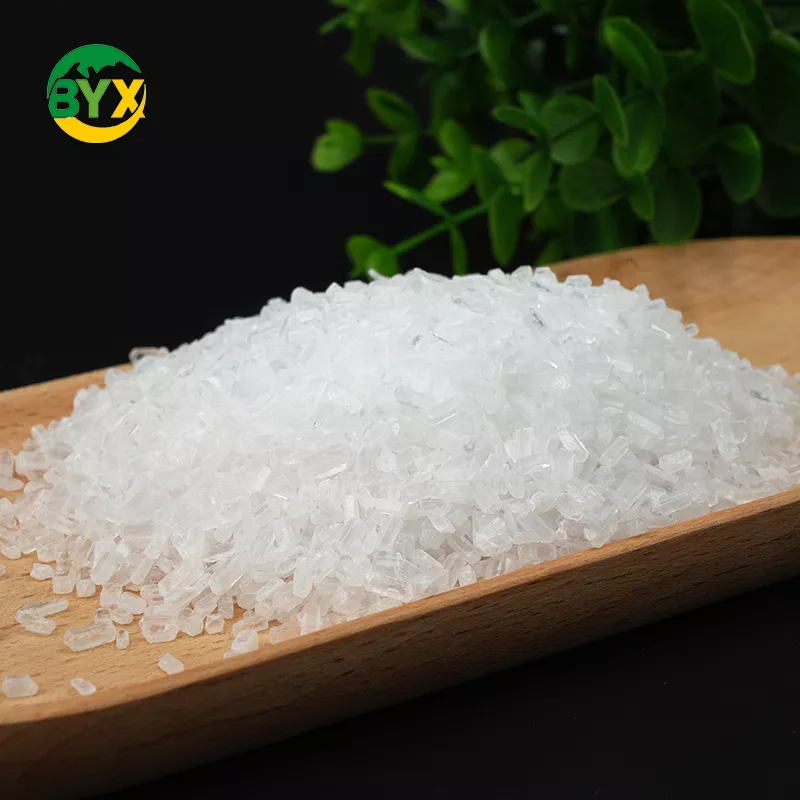
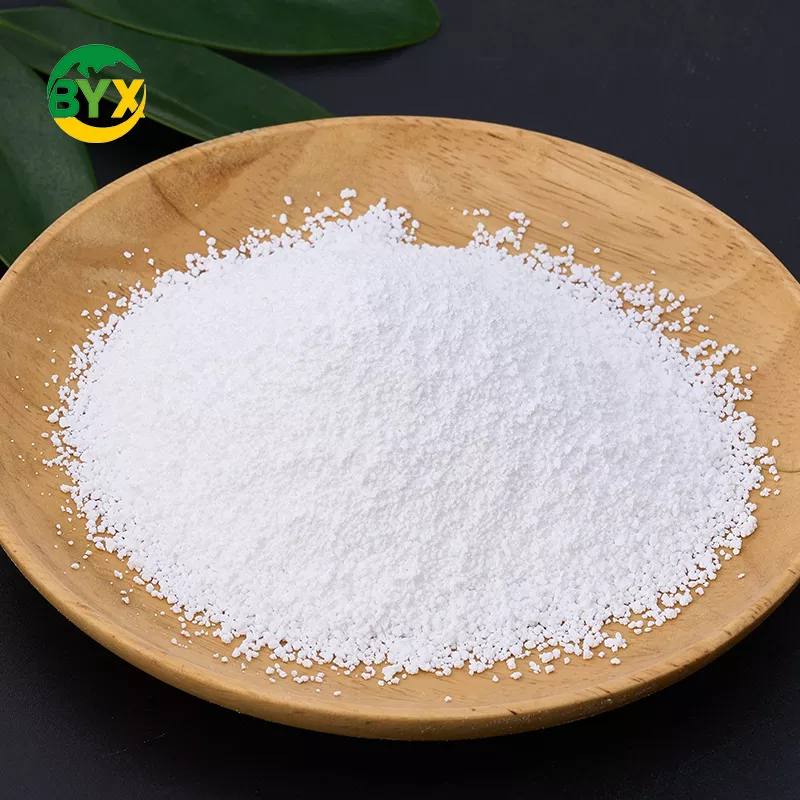
In the modern industrial system, industrial anhydrous magnesium sulfate (MgSO₄) stands as one of the core raw materials in chemical, energy, material, agriculture and other fields by virtue of its unique physical and chemical properties and extensive application scenarios. As a white crystalline powder, it not only undertakes the basic function of a moisture scavenger, but also plays an irreplaceable role in strategic industries such as high-end manufacturing and new energy development.
I. Core Properties of Industrial Anhydrous Magnesium Sulfate
Industrial anhydrous magnesium sulfate features a molecular weight of 120.37 g/mol, a density of 2.66 g/cm³, and a melting point of 1124 °C (decomposition temperature). Its solubility reaches 35.1 g per 100 mL of water at 20 °C. Its core advantages are as follows:
- Strong Hygroscopicity: Each gram of anhydrous magnesium sulfate can absorb 1.05 grams of water, forming different hydrates (MgSO₄·nH₂O, n=1-7) and eventually converting into magnesium sulfate heptahydrate (MgSO₄·7H₂O).
- Chemical Stability: It remains stable below 900 °C and decomposes at high temperatures into magnesium oxide (MgO) and sulfur trioxide (SO₃), showing no reaction with most organic substances.
- Neutral Characteristic: Its aqueous solution has a pH value of 6.0-6.5, causing no corrosion to equipment and suitable for process environments sensitive to acidity and alkalinity.
II. Preparation Processes of Industrial Anhydrous Magnesium Sulfate
Modern industry adopts two mainstream processes for the efficient production of anhydrous magnesium sulfate:
1. Dehydration of Magnesium Sulfate Heptahydrate
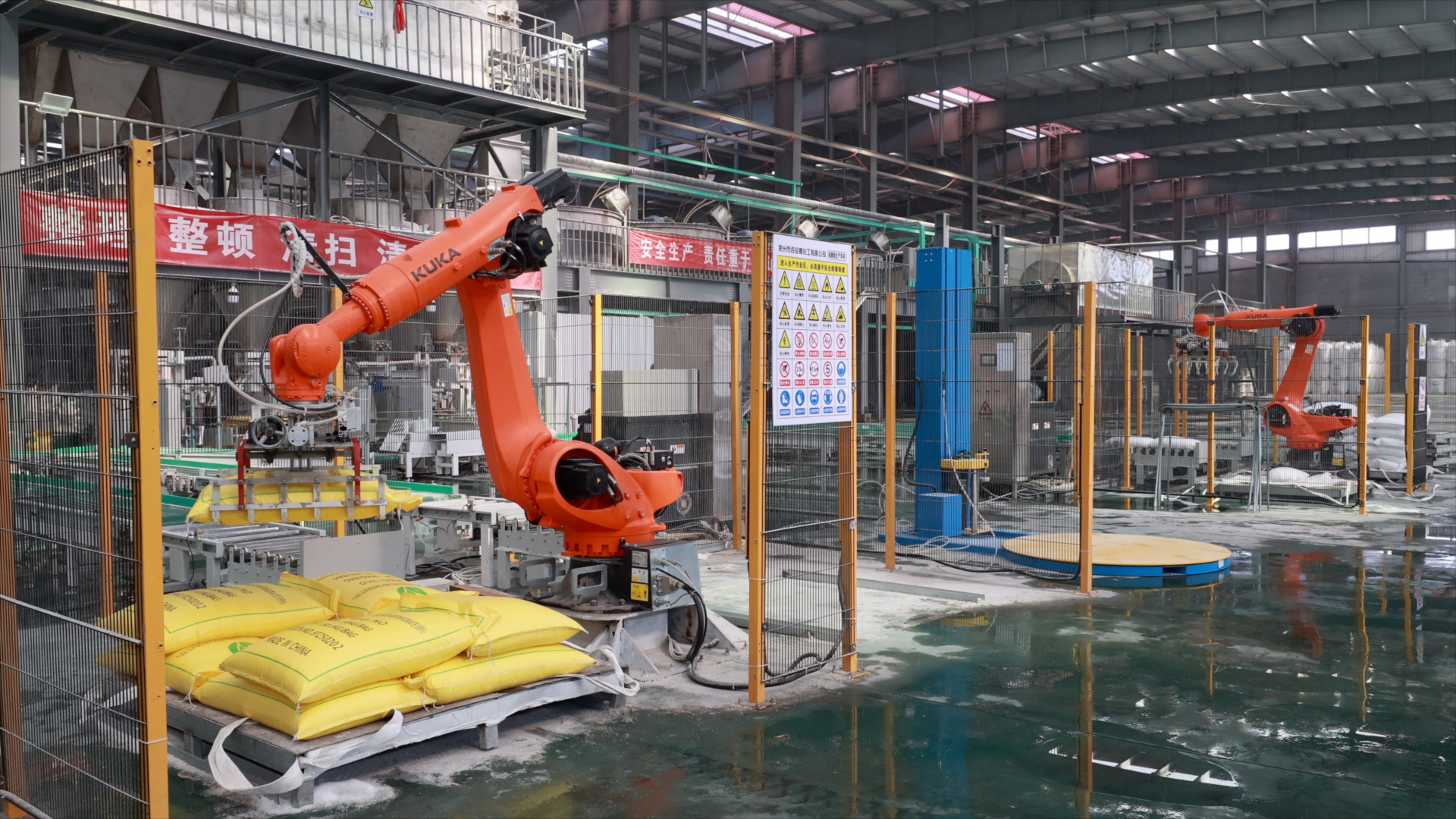
Using magnesium sulfate heptahydrate as raw material, dehydration is carried out under hot air or vacuum conditions at 150-200 °C. Gradient temperature control is adopted to avoid decomposition caused by local overheating. For instance, Baiyexin adopts a gradient dehydration process at 200-250 °C combined with vacuum forced moisture removal technology, delivering products with a purity of 99.7%, where the indicators of iron, heavy metals and other impurities are superior to the national standard for premium-grade products.
2. Chemical Synthesis Method
Magnesium oxide or magnesium hydroxide reacts with sulfuric acid to generate magnesium sulfate solution, which is then concentrated, crystallized and dried to obtain the finished product. Liaoning Haide Chemical Group has developed a low-temperature vacuum dehydration technology in cooperation with Dalian Institute of Chemical Physics, Chinese Academy of Sciences, cutting the unit energy consumption by 18.6%. In 2025, the comprehensive energy consumption per ton of product dropped to 1.23 tons of standard coal.
III. Core Application Fields of Industrial Anhydrous Magnesium Sulfate
1. Chemical Industry: Desiccant and Reaction Medium
- Organic Synthesis: It serves as a desiccant for water-sensitive systems such as Grignard reaction and esterification reaction. It boasts higher water absorption efficiency than silica gel without introducing impurities like chloride ions. For example, in the production of lithium battery electrolyte, anhydrous magnesium sulfate can reduce the moisture content to ppm level to ensure stable battery performance.
- Catalyst Carrier: Leveraging its high specific surface area, it acts as a carrier for hydrogenation catalysts and oxidation catalysts to enhance reaction activity.
- Chemical Intermediate Raw Material: It is used to produce magnesium oxide, magnesium sulfate whiskers, flame retardants and other chemical products. In the electroplating industry, it regulates the pH value of plating solution to improve the uniformity of coating layers.
2. Energy Industry: Natural Gas Dehydration and Battery Manufacturing
- Natural Gas Dehydration: It lowers the dew point of natural gas to prevent pipeline blockage and valve corrosion. In the shale gas exploitation of the Sichuan-Chongqing region, anhydrous magnesium sulfate desiccant has increased transportation efficiency by 15%.
- Lithium Battery Materials: It functions as a dehydrant for electrolyte and a humidity control agent in the production environment, ensuring uniform crystal growth of high-nickel ternary materials (NCM/NCA) and avoiding capacity attenuation.
3. Polymer Materials: Key to Quality Improvement
- Plastics and Rubber: It acts as a stabilizer in PVC, ABS and other materials to improve thermal stability. In tire manufacturing, it reduces bubble defects through dehydration treatment and extends service life.
- Fiber Industry: As an auxiliary material for viscose fiber and vinylon fiber, it enhances fiber strength and dyeing performance.
4. Agriculture and Food Industry: Nutrient Supply and Freshness Preservation
- Magnesium & Sulfur Fertilizer: It provides magnesium required for chlorophyll synthesis and sulfur required for protein synthesis for crops, ideal for magnesium-deficient soils (e.g., southern acidic soil) and chlorine-avoiding crops (e.g., tobacco, potatoes).
- Food Desiccant: It absorbs moisture in the packaging of nuts, biscuits and other foods to extend shelf life; as a nutritional fortifier, it supplements essential magnesium elements for the human body.
5. High-end Manufacturing: Composite Materials and Electronic-grade Applications
- Semiconductor Materials: Ultra-high purity products (≥99.9%) are applied in silicon wafer cleaning agent formulations to prevent metal ion contamination.
- Flame Retardant Synergist: Compounded with phosphate and silicate, it improves the char formation rate and limiting oxygen index (LOI) of polypropylene, EVA and other materials, and inhibits combustion via endothermic decomposition and release of inert gas.

IV. Technological Upgrading and Market Trends
1. High Purity and Compound Development
With the rising purity requirements of new energy, semiconductor and other downstream industries, industrial anhydrous magnesium sulfate is developing toward ultra-high purity (≥99.5%) and low impurity content (Fe ≤10ppm). For example, Jiangsu Zhongtian Chemical has developed products with controllable particle size distribution (d50=25-45μm) through membrane purification technology, meeting the demand for electronic-grade cleaning agents.
2. Green Production
Modern processes realize the recycling of wastewater and waste heat, reducing carbon emissions per unit product by 30% compared with traditional processes. Drying equipment equipped with a waste heat recovery system can raise thermal efficiency to over 85%.
3. Rising Market Concentration
China's industrial anhydrous magnesium sulfate market size is expected to reach 329 million yuan in 2026, with the CR10 (market share of the top 10 enterprises) hitting 58.7%. Leading enterprises dominate the high-end market driven by technological innovation and industrial chain integration.
V. Conclusion
As an "invisible helper" in modern industry, the value of industrial anhydrous magnesium sulfate lies not only in its basic dehydration function, but also in its systematic support for product quality, production safety and efficiency improvement. With technological iteration and upgrading of downstream applications, this traditional chemical product is embracing new development vitality and becoming one of the key materials driving the progress of high-end manufacturing, green energy and modern agriculture.