
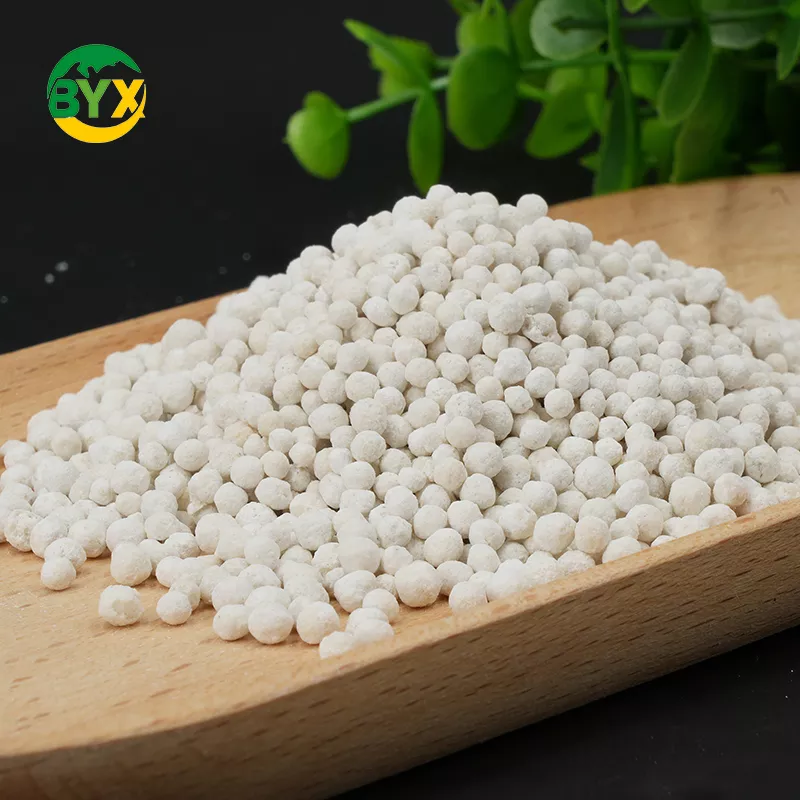
Description
Magnesium Sulfate Fertilizer Specification:
| Specification (according to USP/BP/CP/EP standard) | |
| Grade Item | Magnesium Sulfate Monohydrate |
| Chemical formula | MgSO4H2O |
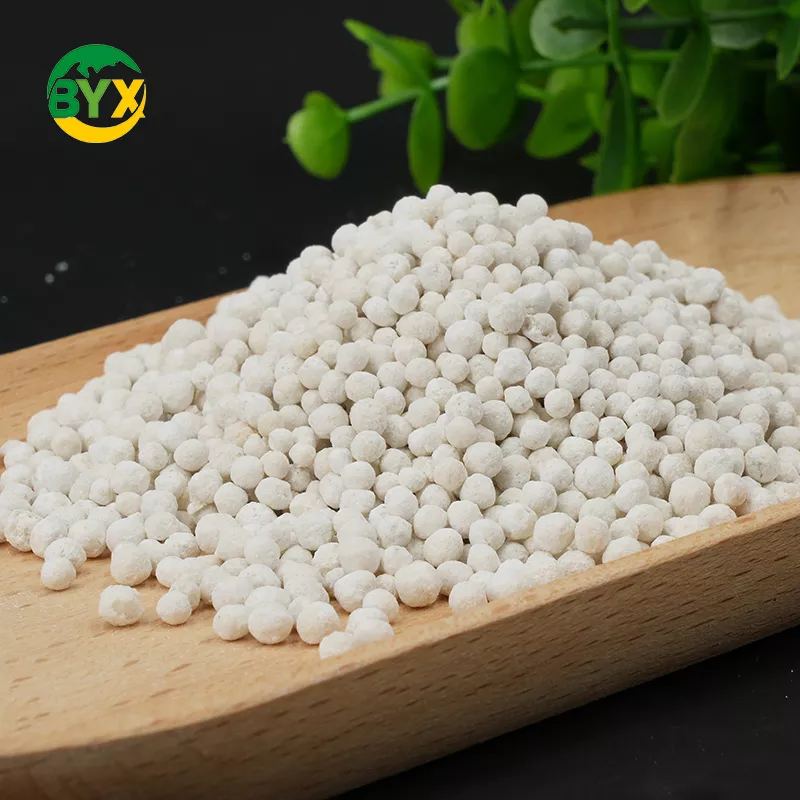
| Appearance | White Powder or Granules |
| Main Content | 99≥ % |
| Magnesium Sulfate | 86≥ % |
| Magnesium Oxide | 28.6≥ % |
| Magnesium | 17.21≥ % |
| PH value ( 5% solution ) | 5.0-9.2 |
| Fe ≤ % | 0.0015 |
| Cl ≤ % | 0.014 |
| Pb ≤ % | 0.0008 |
| As ≤ % | 0.0002 |
| Note: Products can be customized according to different requirements. | |
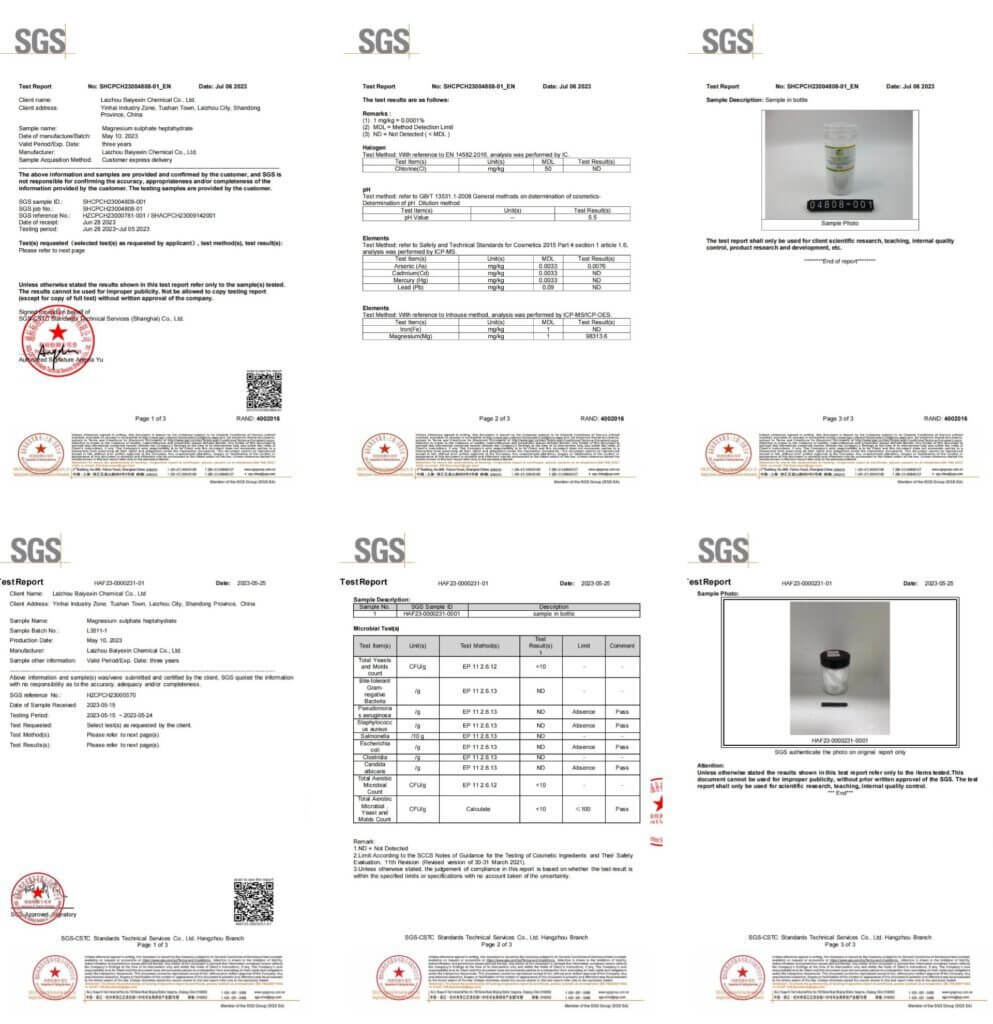
Magnesium Sulfate Fertilizer Examining Report:
Package type:
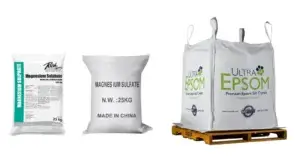
In terms of product packaging, the company can provide woven bags, PE bags, laminated bags, big bags; the weight ranges that are available are 25kg, 50kg, 600kg, 1000kg, and 1200kg.
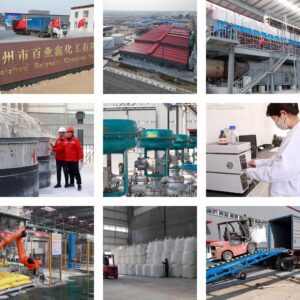
Factory Picture:
Magnesium sulfate fertilizer is considered one of the most efficient medium and micronutrient fertilizer more relevant to global agricultural production. It helps in resolving a problem of magnesium(Mg) and sulfur(S) scarcity effect and its efficacy in improving soil and plant management, health and quality are as high as possible. This study offers background on the subject, looks at the functions, methods of use, safety precautions, manufacturing methods, classifies the information, specifics of other fertilizers, choses a market, deals with labels for packaging and also observes their companies strengths, considers necessary additional services and up to date research results, and includes a FAQ section. The article pays special attention to the properties of the product and the practical use of a well-known brand Laizhou Baiyexin, in terms of which the effective use of this eco-friendly fertilizer should be clear to the readers.
Key Takeaways
- Basic Information
- Effects and Benefits
- Application Methods and Procedures
- Precautions
- Classification and Characteristics
- Comparison with Similar Fertilizers
- Market and Purchasing
Ⅰ. Basic Information: Core Attributes and Classifications of Magnesium Sulfate Fertilizer
1.Definition and Naming System
- Chinese Name: Magnesium Sulfate Fertilizer (abbreviated as “Mg-S Fertilizer”)
- English Name: Magnesium Sulphate Fertilizer, Epsom Salt Fertilizer
- Common Aliases: Agricultural-grade Epsom salt, magnesium-sulfur compound fertilizer, water-soluble magnesium fertilizer, agricultural-grade magnesium sulfate fertilizer, magnesium sulfate micronutrient fertilizer, food-grade magnesium sulfate fertilizer (if applicable for fertilizer use), fertilizer-grade magnesium sulfate, crystalline magnesium sulfate fertilizer, magnesium sulfate fertilizer powder, liquid magnesium sulfate fertilizer, granular magnesium sulfate fertilizer, water-soluble magnesium sulfate fertilizer, chelated magnesium sulfate fertilizer, compound magnesium sulfate fertilizer.
2.Magnesium Sulfate Fertilizer Key Physicochemical Properties
- Magnesium Sulfate Fertilizer Molecular Formula: 7H2O·MgSO4 (magnesium sulfate heptahydrate), H2O·MgSO4 (magnesium sulfate monohydrate), and MgSO4 (anhydrous magnesium sulfate).
- Magnesium Sulfate Fertilizer CAS Numbers: 10034-99-8 (hepta hydrate), 14168-73-1 (mono hydrate), and 7487-88-9 (magnesium sulphate anhydrate).
- Magnesium Sulfate Fertilizer HS/HSN Code: Global HS Code: 28332100.
- Appearance: Magnesium sulphate heptahydrate has needle-form crystals, while magnesium sulphate monohydrate/ anhydrous is in the form of white powder and fine crystals.
- Magnesium Sulfate Fertilizer Color: White.
- Sulfur Content: Heptahydrate: ≥13%; Monohydrate: ≥22.5%; Anhydrous: ≥26.6%.
- Magnesium Content: Heptahydrate: ≥9.8% Mg, ≥13% S; Monohydrate: ≥17.2% Mg, ≥22.5% S; Anhydrous: ≥19.6% Mg, ≥26.6% S.
- GST Rates: India: 12% (preferential rate for agricultural supplies); Pakistan: 5%; Kenya: 16% (subject to local agricultural policies).
- Magnesium Sulfate Fertilizer Solubility: Water almost completely, slightly so in Ethanol, Glycerine and Diethyl Ether, but acetone remains unsoluble.
- Hygroscopicity: The heptahydrate form exhibits strong hygroscopic properties and hence easily clumps during storage, whereas the monohydrate and anhydrous forms have less water holding capacity and therefore are more stable.
- Magnesium Sulfate Fertilizer Stability: Staying stable at room temperature, such forms as anhydrous or monohydrate ones show fewer tendencies to clumping at relative humidity less than 70%; seven water molecules containing form does clump at even a higher humidity level – 60 %.
- Magnesium Sulfate Fertilizer pH Value: 5.0–7.0.
3.Core Components and Fertilizer Classification
Magnesium sulfate fertilizer is a crop stick that is rich in magnesium (Mg) as well as sulfur (S) being medium level nutrients. Magnesium facilitates photosynthesis and enzyme action since it is a necessary component of chlorophyll while Sulphur is important in the synthesis of amino acids and the production of proteins. High grade magnesium sulfate fertilizers do not have added micronutrients however, some natural resources do and it may be included as a minor self-contaminated.
The position of magnesium sulfate fertilizer in the hierarchy of fertilizers relates to the fact that it is a medium as well as micronutrient. Magnesium and sulfur since it is a dual nutrient that does not follow the single nutrient pattern. Unlike complex manures that have a wide range of nutrients, magnesium sulfate fertilizer is quite narrow. It does not have macronutrients including nitrogen, phosphorus, and potassium and hence considered as a combination fertilizer. This aspect makes its contribution quite unique in balanced manure applications.
4.Fertilizer Classification and Comparison:
| Fertilizer Type | Key Differences | Applicable Scenarios |
|---|---|---|
| Single-nutrient (e.g., zinc sulfate) | Contains a singular nutrient only. | Soils deficient in a single nutrient |
| Compound (e.g., NPK) | Contains macronutrients, with medium/micronutrients as secondary | Crops needing comprehensive nutrition during growth |
| Magnesium Sulfate Fertilizer | Mainly incorporates Magnesium and Sulfur, which have a high water solubility. | Mg/S poor soils and emergency topdressing. |
5.Comparison of Different Hydration States:
| Hydration State | Magnesium Content | Hygroscopicity | Dissolution Speed | Application Method | Cost (per ton) |
|---|---|---|---|---|---|
| Heptahydrate | 9.8% | High | Moderate | Soil basal application, fertigation | 500–700 CNY |
| Monohydrate | 17.2% | Medium | Fast | Granular fertilizer raw material, drip irrigation | 1500–2500 CNY |
| Anhydrous | 19.6% | Relatively high | Very fast | Foliar spray, liquid fertilizer formulation | 1800–2800 CNY |
Ⅱ. Magnesium Sulfate Fertilizer Role and Benefits: From Crop Physiology to Yield Improvement
1.Core Functions: Addressing Key Crop Growth Issues
- Nutrient Supply: This is necessary for the formation of chlorophyll and makes up 2.7% of the molecular weight of chlorophyll, hence, there is no chlorosis of the older leaves as the veins become green and healthy. Magnesium prevents this. Synthesis of proteins requires sulfur, and helps prevent short and yellow colored leaves or plants.
- Physiological Regulation: It makes more than three hundred enzymes active, e.g., phosphokinase and also makes carbohydrate transport more active e.g., sugarcane contains more sucrose and makes it photosynthetically more efficient by 20–30%.
- Stress Resistance: Magnesium protects both from stress and disease, the exposure to stress which causes drought, and in some cases for example potatoes 15–20% less of late blight incidence.
2.Indirect Benefits: Enhancing Quality and Yield
- Yield Increase: When 15 kg/acre of Magnesium Sulfate Fertilizer as basal is applied to sugar cane, it increases yield by 10%–12%. Grape flowering stage foliar application of the 1% solution improves fruit setting by 18%.
- Quality Improvement: The granadillas subjected to Magnesium Sulfate Fertilizer treatment demonstrate a 12%–15% rise in vitamin C content and a 1–2% increase in total dissolved solids; the contents of the oil in the rapeseed increase by 5%–8%.
- Fertilizer Synergy: The combination of these nutrients with the nitrogen and phosphorous fertilizers enhances the absorption efficiency by 15%–20% not only increases the efficiency of absorption but also decreases the nutrient loss.
3.Magnesium Sulfate Fertilizer Applicable Crops and Soils
Magnesium Sulfate Fertilizer Crops:
- Fruit trees: citrus, grapes, apples, bananas, sugarcane.
- Cash crops: sugarcane, tobacco, rubber, tea, betel nut, roses.
- Vegetables: tomatoes, potatoes, peppers, cucumbers, rapeseed, cabbage.
- Field crops: potatoes, corn, rice, lawns, cotton.
Magnesium Sulfate Fertilizer Soil Types:
- Acidic red soils: replenishment of leached magnesium and controlling the pH.
- Sandy soils: poor in nutrients so there is a need for perennial top-dressing to stop leaching of magnesium.
- The soils practicing long use of concentrated mixed or compound fertilizers: also help to balance nutrition and avoid deficiency of magnesium.
4.Correcting Deficiency Symptoms
- Magnesium Deficiency: Occurs with marginal symptoms in leaves, where the older leaves present a netted chlorosis of tissue between the veins; if excessive, the leaves may turn necrotic.
- Sulfur Deficiency: Causes respective stunting of the plant, leaves become short, bent, and easily breakable, and flowering is inefficient.
- Examples:
- Cotton: presence of interveinal chlorosis, with veins remaining green in the old leaves.
- Rice: without impairing stem height, older lower leaves droop and they are interveinally chlorotic.
- Potatoes: distended lower margin of the leaves, raises upwards, leaves become chlorotic at the base of the leaf.
5.Magnesium Sulfate Fertilizer corrects these symptoms:
- Rapid Replenishment: If magnesium is applied by foliar spraying, the element reaches the plant tissues within 1-2 hours. As a result, the yellowed areas are green after 2–3 days.
- Soil Restoration: Basal application also overcomes the aluminum toxicity of acidic soils while raising the concentration of exchangeable magnesium above 50 mg/kg, which is the optimum level.
Ⅲ. Agricultural Application: Precise Application Methods
1.Magnesium Sulfate Fertilizer Application Methods
- Basal Fertilizer: Dissolved 10–15kg in every acre to be done before plowing and furrowing and thoroughly mixing it with a waste of animal organic fertilizer.
- Top-Dressing: Use around 10 to13 kg per acre on plantation and its trees at any time during the productive season through fertigation system. 250 to 500 g each tree is relevant for treatment of fruit trees.
- Foliar Spraying : On fruit or trees-–not less than 0.5% and not more than 1%, on vegetables— not more than 0.5% but not less than 0.2%, on cereals— ranging from 0.8% down to 0.3%. Use 50 to 150kg per acre of such preparation solution with an interval of 7 to 10 days.
- Drip Irrigation: Continuous applying. Suitable for high marketable crops particularly producing greenhouses and strawberries.
2.Magnesium Sulfate Fertilizer Application Timing and Rates
- Lawns: in a frame of 5 to 8 kg gross per acre, available at the contribution of fertigation that is growth stage.
- Betel Nut: it will be between 200 and 300 g for one tree at the period of fruit formation, for this too it should be incorporated with organic fertilizer.
- Sugarcane: 15-20 kg per acre rate at tillering stage for basal application.
- Grains: 8 to 10 kg per acre rate at seedling for top dressing.
- Cash Crops: at the period of flowering/fruiting or during it application of 12-15 kg per acre supplemented with spray feeding.
- Fruits and Vegetables: 10 to 13 kilograms per acre in the fruit stage along with spray application.
3.Magnesium Sulfate Fertilizer Dilution Ratios and Frequency
- Foliar Spraying: One should Ideally Dilute 1000-1500 Times and spray the chemical every 7-14 days or if Shortages are acute it can be diluted 800-1200 times and applied every 7-10 days.
- Soil Irrigation: Conventionally dilute up to 800-1200 times and apply the nutrient every 7-14 days
4.Precautions
- Compatibility: Incorporate phosphate fertilizers or alkaline fertilizers (e.g., lime, wood ash) with caution in the tank mix to help prevent precipitation or its ineffectiveness.
- Timing: Foliar sprays are best done in early mornings or late evenings and on days with relatively mild temperatures; the basal fertilizer is applied prior to plowing and top-dressed in the earlier stages of growth.
5.Application Cases
- Betel Nut Orchard: The lowest amount of fruits is dropped, and hence the greatest yield is obtained, by 0.8% foliar application of Magnesium Sulfate Fertilizer when the palm is flowering, and 1 kg basal application per tree, with the fruit dropping reduced by 22% while yield increased by 15%.
- Tea Plantation: The Magnesium Sulfate Fertilizer is used for fertigation at the level of 0.2% before spring plucking of tea (8% increase of amino acid content, 5% decrease of polyphenols thus improving the taste).
Ⅳ. Magnesium Sulfate Fertilizer Precautions: Safe and Efficient Use
1.Compatibility Restrictions
Incompatible:
- Phosphates - say potassium dihydrogen or calcium superphosphate : This leads to the adequate separation of the solution with the formation of undissolved magnesium phosphate, diminishes activity and efficacy.
- Strong bases – say ‘Bordeaux mixture’ or ‘lime sulfur’. These alter the structure of pesticides causing phytotoxicity to crops.
- Very high calcium fertilizers such as calcium nitrate – increases competition with magnesium, hence reduces its absorption to 30% of the originally applied rates.
Safe Combinations: The resolution is that urea is incorporated at 1:10, or potassium sulfate at 1:5 and is used within a few seconds after making.
Mixing Principles: All should be diluted before adding to another product, use as soon as possible, do compatability checking for novel mixes in few liters first and no precipitation or loss in efficiency.
2.Overuse Risks and Remedies
Dangers:
- Crops: Roots darkening, leaf margins drying out (scorching).
- Ground: Salinity that makes electrical conductivity exceed 2.5 mS/cm, soil destructurisation.
Detection: Yellowing of the young leaves, dwarf plants, root browning, soil EC being more than 2.5 mS/cm or extremely high magnesium saturation.
Remedies: Cease the application of magnesium fertilizers, apply between 50 and 80 m³/acre water to flush the salts, mulch with organic fertilizer (1000 kg/acre) or biological fertilizer for soil restructuring, spray with 0.3% amino acid solution to reduce the stress of crops.
3.Magnesium Sulfate Fertilizer Storage Requirements
- Please keep at temperatures less than 30 degrees ℃ and also the humidity level below 60% in a room. It should be aerated and moisture-free too.
- Utilize a hygroscopic material to package the product.
- In order to maintain the original state, do not expose to extreme temperature and direct sunlight.
- It should be kept free from water while being stored separately from other fertilizers and pesticides.
- Make sure that during the movement ingression elastic packs of phosphates are not touched by rain or damaged, because during such activity they can be damaged physically.
- Heptahydrate will clump together when it comes into contact with water, which will cause problems in its application. Also, exposure to moisture for prolonged periods might result in nutrient wastage, and so does storage with materials that are alkaline in nature.
4.Optimal Combinations
- Organic Fertilizer: Enhances the equalized bioavailability of magnesium and improves the soil's physical qualities.
- Nitrogen/Potassium Fertilizers: For grains, citrus fruit and vegetables, the required nitrogen and potassium balance is most often achieved via application of ammonia with urea or potash with potassium sulfate: NPK fertilizers.
- Micronutrient Fertilizers: Can be used in conjunction with zinc or boron fertilizers.
Deployment of organic fertilizer, NPK and magnesium sulfate fertilizer increases the productivity and product quality of citrus and grapes, and urea, diammonium phosphate, potassium sulfate and magnesium sulfate fertilizer fulfills nutritional requirements for field crops.
Ⅴ. Magnesium Sulfate Fertilizer Production Process: Quality Control from Raw Material to Product
Mainstream Production Processes
1.Natural Brine Extraction:
- Raw Material: Brine derived from the process of making salt from sea water (composed of 8-12% magnesium sulfate in water).
- Steps: Remove calcium and iron by precipitation using lime milk, regulate to pH 9.0~9.5, evaporation and concentration enter multi-effect evaporation at 60-70C under vacuum and do at -0.08MPa, boiling heptahydrites form below 32.4°C or pure monohydrites between 32.4°C and 100°C, the evaporation product is dried by warm air (80-90°C) such that the moisture content is below 1%.
- Advantages: Availability of raw materials from nature, inexpensive, and a purity of higher than 99.5%.
2.Sulfuric Acid Method (Laizhou Baiyexin’s Core Process):
- Raw Materials: at least 90% of a compound heralded as Magnesium Carbonate (MgCO₃) with a purity of mostly (≥98%) safe industrial sulfuric acid (H₂SO₄) as the reactive mixture.
- Conditions: Brought the temperature to reach a range of 50-60°C and gave the reaction for a period of 2 to 3 hours at pH 5.5 to 6.0.
- Product: It’s purity is 99.5% and it is suitable for usage both in the food and foliar spray categories.
3.Byproduct Recovery (Circular Economy):
- Raw Material: The waste generated from producing borax, which consists of around 30 to 40 percent of MgSO₄.
- Features: Cheap, but with high requirements for purification from impurities, meaning impurities such as heavy metals should be less than or equal to 0.001%. Can be used as industrial grade lawn fertilizers.
Ⅵ. Classifications and Features
There are many types of magnesium sulfate fertilizers that have different proportions of magnesium sulfate, exist in different forms, and have varying application methods, each with its own set of unique traits and use scenarios.
1.By Purity and Use
Agricultural-Grade: Purity 95–98%, efficient, suitable for most crops and types of soil.
- Heptahydrate: Respective content - Mg ≥9.8%, SO₄²⁻ ≥32%.
- Monohydrate: Respective content - Mg ≥16%, SO₄²⁻ ≥56%.
Food-Grade: Purity ≤99.5%, used for the best quality of specific fruits/vegetables and for organic farming, more expensive.
Industrial-Grade: Purity 90–95%, used for afforestation and extensive lawns, cheap but requires the control of the heavy metal.
2.By Physical Form
Crystalline:- Mainly heptahydrate, present in needle or rod-shaped crystals, easy to use and apply to the soil base, few hygroscopic tendencies.
Powder:- Monohydrate or anhydrous, with good reduce surface area, is fast in solubility, contribute to a more efficient foliar application and good for the manufacture of liquid dressings
Granular: – Average 2-4 mm TE Granules recommended for Top Dressing and Floating Applications. Cum-pith based TE Granules are supplied in bulk form, It is exempt from dust and caking due to its uniform nutrient release which is specially suited to large scale plantation.
Liquid: Commonly a 10-30 % dilution, can be utilized for drip lines and spraying, as it is fairly easy to mix and penetrate.
3.Special Types
Chelated Magnesium Sulfate Fertilizer: Is combined with EDTA which enhances the durability of this type of fertilizer in alkaline soils and allows for 1.5-2 times more deposition than the regular magnesium sulfate fertilizer hence growing high status crops or requiring alkaline soil fertility.
Compound Magnesium Sulfate Fertilizer: Usually contains zinc and boron among other elements to cater for different nutrient requirements making it easier for farmers as it eliminates a lot of fertilizing outings.
Slow-Release Magnesium Sulfate Fertilizer: Has a coating in one or two layers which helps nutrients to slowly leach out within a period of 2_3 months, hence it is applied less frequently than others hence it is fit for fruit trees and other perennial plants.
4.Purity Differences and Selection Criteria
The difference between 98% and 99% Purity:
- Factor of 98 percentage: Substantial for most field and horticultural products applications, economically viable.
- Factor of 99 proportion: Most suited for foliar application, greenhouse or organic farming and high-priced crops, less impurities, a better option in terms of safety
Which Purity To Choose:
- As for the basic application: 98% purity will be applied.
- Over the leaves: Stadium of 99% purity and above.
- When dealing with saline-alkaline soils: Use high-purity products to minimize ion interference.
- For Growing crops on a large scale: choose the cheaper option first; for small-scale: devoted to purity a lot.
Ⅶ. Comparison with Similar Fertilizers
1.Comparison with Other Magnesium Fertilizers:
| Fertilizer Type | Advantages | Disadvantages | Applicable Scenarios |
|---|---|---|---|
| Magnesium Sulfate Fertilizer | Easily soluble and absorbent, rich in Sulfur in its composition, versatile in terms of its application. | Prolonged continuous application can result in the soil becoming alkaline. | Neutral/alkaline soils, emergency top-dressing. |
| Calcium-Magnesium-Phosphate | Presence of Ca, Mg, P, and remediation of the soil of the pH by its addition. | High application rate, slow release; high P. | For acidic soils, we recommend long-term, regular application of base fertilizer. |
| Magnesium Nitrate | Quick supply of nitrogen. | It is costly, tends to be moisture absorbing and has a side effect. | Vegetable foliar top-dressing, crops needing N and Mg |
| Magnesium Chloride | Highly of magnesium, yet low of price. | The resources could have chlorine which is not healthy to chloride intolerant crop. | In case the crops are not sensitive to chloride, this product should be used with great care in soils that are saline. |
| Magnesium Oxide | An immense presence of magnesium that is gradually released to enrich the soil. | Solubility is low, slow effect | Basal application with organic fertilizer for acidic soils. |
Magnesium Sulfate Advantages: Magnesium sulfate is better as it is highly soluble whereas calcium-magnesium-phosphate and magnesium oxide are not, it is safer as opposed to magnesium chloride, and lastly it provides other nutrients unlike the pure sources of magnesium.
2.Comparison with Other Sulfur Fertilizers
- Ammonium Sulfate: Provides environmental benefits through the delivery of nitrogen and sulfur as nutrients, although extensive use may raise soil acidity; has a wide range of applications that include nitrogen-requiring crops, less useful paddy fields due to nitrogen loss.
- Potassium Sulfate: Provides potassium and sulfur, very well adapted for crops that require high levels of potassium, but unnecessarily high in terms of cost.
- Magnesium Sulfate: Provides magnesium and sulfur, yet no nitrogen or potassium, appropriate for magnesium supplementation or to avoid the excessive nitrogen/potassium (e.g. swelling in fruits, sensitive to nitrogen crops). Superior in correcting both magnesium and sulfur deficiencies.
3.Magnesium Sulfate Fertilizer vs. Epsom Salt Fertilizer
- Purity: The minimum purity of Epsom salt (pharmaceutical grade) is 99.5% as there is a stringent control on the impurities. The purity ranges for agriculture grade are between 95 and 99%.
- Standards: Epsom salt is compliant with Pharmacopoeial standards while the agricultural grade one is within the specifications of a fertilizer.
- Applications: Epsom salt is consumed for healing and includes a laxative option or removing pain and swelling. At the same time it would be correct to delineate agricultural magnesium sulphate that increases crops.
- Price: For Epsom salt increment of the price is usually by about three to five times.
- Note: Because of the cost, medical Epsom salt is not fit for agricultural purposes and for this very reason agricultural magnesium sulfate is not necessarily a medical grade.
Ⅷ. Market and Selection Guide
1.Market Size and Production Distribution
At present, the global market for magnesium sulfate fertilizer has been increasing in scope. The prime mover in this process is Asia-Pacific. China is the largest producer of the fertilizer with the dominant provinces being Shandong, Hebei, Jiangsu, and Qinghai. One of the main reasons is attributable to Laizhou in Shandong where a vast amount of ore has been discovered. This product is produced in a large amount from both Pakistan and India whereas the major contributors, particularly for the number of cash crops that are grown in the tropical regions are the African countries and a major portion of them is quite a customer.
China: The average production in China is within the range of 800,000 tons to 1,000,000 tons and the share of agricultural-grade is about 60% of the above said value during the peak season. The value of demand is enhanced by 8-10% every year as a result of such possibilities as soil analysis and accurate application of fertilizers, especially in growing cultures that are high value in the market.
Key Countries:
- Pakistan: 800,000 tons/year, exports to the Middle East (cotton).
- Kenya: 100,000 tons/year consumed, 90% imported (tea, coffee).
- India: 600,000 tons/year, mainly domestic use (sugarcane, betel nut).
2.Mainstream Brands and Product Differences
- International Brands: Yara (Norway), ICL (Israel), Aries (USA) – high purity, advanced technology, higher prices, dominate premium markets.
- Domestic Brands: Coromandel (India), IFFCO (India), BAIYEXIN (China Laizhou) – cost-effective, tailored to local soils, responsive after-sales.
- E-commerce Brands: Indiamart sells Vanita Agro products which have flexible pricing that allows small-scale purchasers to buy.
- International brands provide customers with higher purity standards and specialized products whereas domestic brands deliver superior cost efficiency and better ability to adapt to local conditions.
3.Brand Analysis:
| Brand | Origin | Product Features | Price Range (Monohydrate/ton) | Reputation Advantage |
|---|---|---|---|---|
| Laizhou Baiyexin | China | High purity (99.5%), full product range | 1800–2500 CNY | Cost-effective, advanced technology |
| Yara | Norway | High-purity slow-release (99.5%) | 3500–4000 CNY | Advanced technology, premium market |
| ICL | Israel | Chelated magnesium sulfate (EDTA-Mg) | 3200–3800 CNY | Suitable for saline-alkaline soils |
| IFFCO | India | Cost-effective (98% purity) | 1900–2200 CNY | Strong local adaptability |
| Maharashtra | India | Granular (2–4 mm) | 2000–2300 CNY | Mechanical application-friendly |
| Home Depot | USA | Small retail packs (5kg/25kg) | 2500–2800 CNY | Convenient channels |
| Mahadhan | India | Compound (with Zn/B) | 2200–2500 CNY | Multi-deficient soil adaptability |
| Gromor | India | Liquid (30% concentration) | 2800–3200 CNY | Drip irrigation-specific |
4.Magnesium Sulfate Fertilizer Price Breakdown by Specification:
| Specification | Price Range | Price per kg | Influencing Factors |
|---|---|---|---|
| 5kg Small Pack | 15–25 CNY/bag | 3–5 CNY | High packaging cost, retail |
| 25kg Medium Pack | 60–100 CNY/bag | 2.4–4 CNY | Common for farmers, bulk discounts |
| 50kg Large Pack | 120–200 CNY/bag | 2.4–4 CNY | Low unit cost for plantations |
| Bulk (ton) | 1800–2800 CNY | 1.8–2.8 CNY | Purity (98% vs. 99%), hydration state, transport distance |
5.Magnesium Sulfate Fertilizer Price Influencing Factors
- Purity: For each percent gain in purity, the price increases by 5% to 8%.
- Hydration State: The prices of the substance in descending order are anhydride, monohydrate and heptahydrate.
- Packaging: When large packages are used unit cost falls by 15-20 percent.
- Purchase Volume: The goods are cheaper by 10-15 percent in bulk economically in comparison to retail.
- Region: Close to production regions prices are cheaper, while they increase with distance due to the costs associated with transportation.
6.Selection and Authenticity Verification
Selection Criteria:
- It is important to clearly indicate information about purity, magnesium content, and compliance with standards in a product label.
- Make sure the fertilizer producer has a permit to carry out the production of fertilizer and is in possession of an inspection report.
- Even color and no any contaminants seen, worked as crystals/powder on a regular basis.
Authenticity Verification:
- Solubility Test: Water is expected to dissolve completely the high-quality goods without leaving sediments at the bottom.
- pH Test: pH of s - aq solution is maintained between 5.0 and 7.0.
- Crystal Observation: Heptahydrate received crystals that were needles; while monohydrate was powder.
- Label Check: Cross check the packages for CAS number and standard labels to prevent dealing with raw samples that are not labeled.
Cost-Effective Choices:
- Field crops: For basal applications, consider utilizing seven-hydrate inputs with a typical purity of 98%.
- Foliar spraying: One can consider levels of mono-hydrate/anhydrous >99% for sulfate addition.
- When considering the purchase of the local product, for example from Laizhou Baiyexin, transportation saves the buyer approximately 200–300 CNY/ton.
Ⅸ. Laizhou Baiyexin Magnesium Sulfate Fertilizer Advantages
Not only is Laizhou Baiyexin one of the most reputable companies in China that specializes in Magnesium sulfate production. It is also valued by farmers for providing excellent product quality, production process, and after-sales service.
1.Product Features and Core Advantages
- High Purity: with the major constituents being of at least 99.5%, even the lowest level of magnesium (heptahydrate is not less than 9.8%, whereas monohydrate reaches 17.2%) is above the standard in the industry.Due to the strict controls of quality, it is possible to avoid impurities and ensure that the nutrients can be absorbed by plants safely.
- Customization: Ability to modify the levels of micronutrients, such as zinc and boron, required by specific soil fertility constraints.
- Diverse Product Range: The wide array of products produced includes agricultural, crystalline, powder, granular and liquid forms that suit different crops and applications. Standard packages and one-stop buying are possible.
- Advanced Production: Calls for appropriate utilization of mineral resources in the Laizhou district, as well as the improvement of extration methods, precision filtering, and multi effect combination of evaporation for better purity as well as effective resource use and low power consumption. Automation in production level makes it possible to maintain the quality level always.
2.Packaging Specifications and Advantages
- Specifications: retail –- 5kg, cooperatives—25kg, plantations—50kg and huge volumes up to 1 ton in Big bags.
- Materials: Several layer composite woven bags with polyethylene film inside to prevent soaking, strengthen the top layer to avoid damage.
- Design: Valves which prevent water penetration, opening that can be easily torn apart and all relevant information like details, regarding size and materials, their application, and warning are in print.
- Advantages: more than 30% more waterproof, transport loss is less than 0.5%, virtually all environmentally friendly materials that can be reused according to dispose according to RoHS standards in EU.
3.Corporate Competitiveness: 6 Reasons to Choose Laizhou Baiyexin
- Production Advantage: The business is placed in Laizhou, the major center of magnesium sulfate fertilizer in China, which comes with the advantage of low costs of the raw materials and shorter supply chains.
- R&D Strength: Works along with research-based agricultural institutions to develop products depending on the location and condition of soils having high acidity and saline-alkaline nature.
- Quality Control: The limit of the heavy metals, in each batch, after 36 inspections is not more than 0.0005 in agreement with GB/T 26568-2011.
- Supply Chain: They have their own logistic department which allows the provision for full truck loading and less than truck loading lowering the cost.
- Technical Support: There is also scope for soil quality analysis and fertilization recommendations in addition to deficiency treatments.
- After-Sales: There is a customer service desk, open 24 hours a day and any issue example clumping free replacement will take 48 hours to solve it.
Ⅹ. Special Applications and Research Progress
1.Applications in Extreme Conditions
Saline-Alkaline Soils:
- Precautions: High magnesium content but low availability; use with soil amendments.
- Utilization: Use foliar sprays at lower concentrations (0.5–1%) but do it often;.
- Dosage: Make a reduction of 20–30% in order to prevent salinity effects.
Acidic Soils:
- Precautions: Lack of magnesium is affiliate primarily to excessive acidity; hence avoid using this product in isolation for a long time in order not to significantly lower or increase the pH.
- Application: When used in combination with another fertilizer, whether organic in nature or externally added in the form of dolomite, the product could be applied as basal or foliar.
- Measures: Check for soil pH every 2-3 years and if it is below 5.0, stop using the fertilizer.
Dry and Rainy Regions:
- Dry Regions: To improve the use of water, endeavors should be taken to ensure that drip irrigation is implemented and little or no amount is applied at high temperatures.
- Rainy Regions: Boost basal application, reduce the number of times top-dressing is done, and use granular formulations to minimize losses due to leaching.
2.Recent Research and Innovations
- Slow-Release Magnesium Sulfate: With the use of magnesite or hydromagnesite as the main granule components, dual layer coated granules (i.e. slow-release and nutrient ones) help to control soil acidity and ensure a sustained nutrient release for 3 to 4 months which means increased efficiency of more than 30 percent.
- Nano Magnesium Sulfate Fertilizer: The use of tiny particles coated with nanos provides more than 80% absorption which is about 2 to 3 times greater than the conventional counterparts and thus suitable for application through foliar spray.
- Functional Compound Fertilizers: Involves stress-resistance enhancement in grapes and strawberries by use of humic acid or amino acids.
- Precision Application: Employing intelligent fertilization practices utilizing soil and crop analysis minimizes wastage, reducing environmental pollution.
- Benefits: Fertilizer utilization efficiency increases by 15–30 percent, productivity by 8–15 percent, quality of agricultural products by 10–20 percent and reduces the adverse effects on the environment.
3.Cross-Field Applications
Horticulture:
- Potted flowers: 0.2 – 0.5% of foliar application is recommended for the azaleas, camellias and other acid-lovers.
- Ornamental trees: Applications can be performed by injection or by pour around the trunks for maintenance of green pines.
- Lawns (e.g., golf courses): 5 kg/acre of granules for a lush green lawn.
Forestry:
- Seedling stage: During this stage, 0.5% to 1% dosage in the growing mediums is utilized to enhance the seedlings’ growth.
- Afforestation: Pines and eucalyptus that are deficient in magnesium are given a basal dose at planting.
- Economic forests: Chestnuts and walnuts are sprayed with fertilizer onto the leaves of the trees in the course of flowering to encourage setting and quality of fruits.
Kindly note: For activities such as gardening, horticulture, and forestry, there is a need for higher purity since often times, the activities require more precision and have purity levels of ≥99%, which could sometimes need foliar or spot application.
Ⅺ. Frequently Asked Questions
1.What is the role of magnesium sulfate as a fertilizer?
It improves the supply of magnesium and sulfur, corrects nutritional shortcomings, boosts cropping rate and quality, assists in the regulation of soil pH, ameliorates soil texture, and increases uptake of nutrients.
2.What is magnesium sulfate fertilizer composed of nutritionally?
Heptahydrate: ~9.8% Mg, ~13% S.
Monohydrate: ~17.2% Mg, ~22.5% S.
Anhydrous: ~19.6% Mg, ~26.6% S.
Is it possible to use magnesium sulfate together with NPK fertilizers? Yes, it is suitable in mixing with both nitrogenous and potassic fertilizers, however, it should not be directly added to phosphates in order to avoid them precipitating, it should be applied separately approximately after 3-5 days.
3.Can magnesium sulfate a fertilizer? What one?
Yes, this is a water soluble chelated magnesium and sulfur fertilizer.
4.Is magnesium sulfate good for fertilizing?
Undeniability for the use of it for planting crops on magnesium or sulfur deficient soils is high, although, it is never advocated to apply there and then anywhere.
5.What are the recommendations for the use of magnesium sulfate as a fertilizer?
Has to be employed based on the requirements of the crop: solutions used for spraying through the leaves (0.5–2%), in the soil or basal (10–25 kg/acre), through the watering system or by drip (0.1–0.3%). Apply magnesium according to the nutrient requirement of the crop, or when symptoms of magnesium deficiency appear.
6.How much does a magnesium sulfate fertilizer cost in bulk?
Prices in 2025 are as follows: monohydrate: 1300–1800 CNY (yuan) price per ton; anhydrous: 2000–2500 CNY price per ton, with price mainly differentiated by its quality, the area of supply and volume.
7.What Fertilizer is Epsom Salt?
Fertilizer that contains magnesium sulfate heptahydrate AKA Epsom salt. However, in this context, “Epsom salt fertilizer” is specially prepared using agricultural-use heptahydrate. This is not referred to as EP grade as it is intended for agricultural applications.
8.Where can I get magnesium sulfate fertilizers?
Purchase from the nearest agricultural input suppliers, fertilizer distributors, websites selling agricultural inputs (E.g. Indiamart) or buy in bulk from said companies like Laizhou Baiyexin.
9.How to judge the quality of magnesium sulfate fertilizer?
High-quality fertilizer has uniform color, no impurities, full solubility without sediment, pH 5.0–7.0, clear labeling, and valid manufacturer certifications. Conduct solubility and pH tests for verification.
Magnesium Sulfate Fertilizer China-BAIYEXIN

Baiyexin is the largest magnesium sulfate fertilizer manufacturer in China, providing magnesium sulfate fertilizers with various contents and specifications.
Product SKU: BYX20472
Product Brand: BAIYEXIN
Product Currency: USD
Product Price: 100
Price Valid Until: 2026-12-31
Product In-Stock: InStock
5


BaiYeXin –
After long-term use of Baiyexin's Magnesium Sulfate Fertilizer, the yield of our orchard has steadily increased, and the magnesium fertilizer is of reliable quality. We have listed it as our long-term designated supplier.