
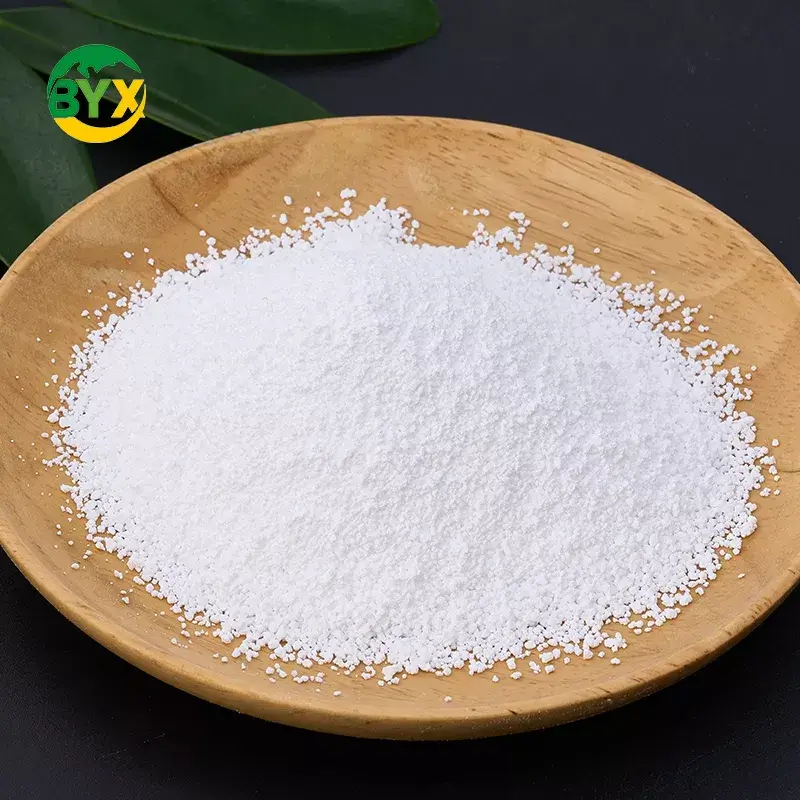
Description
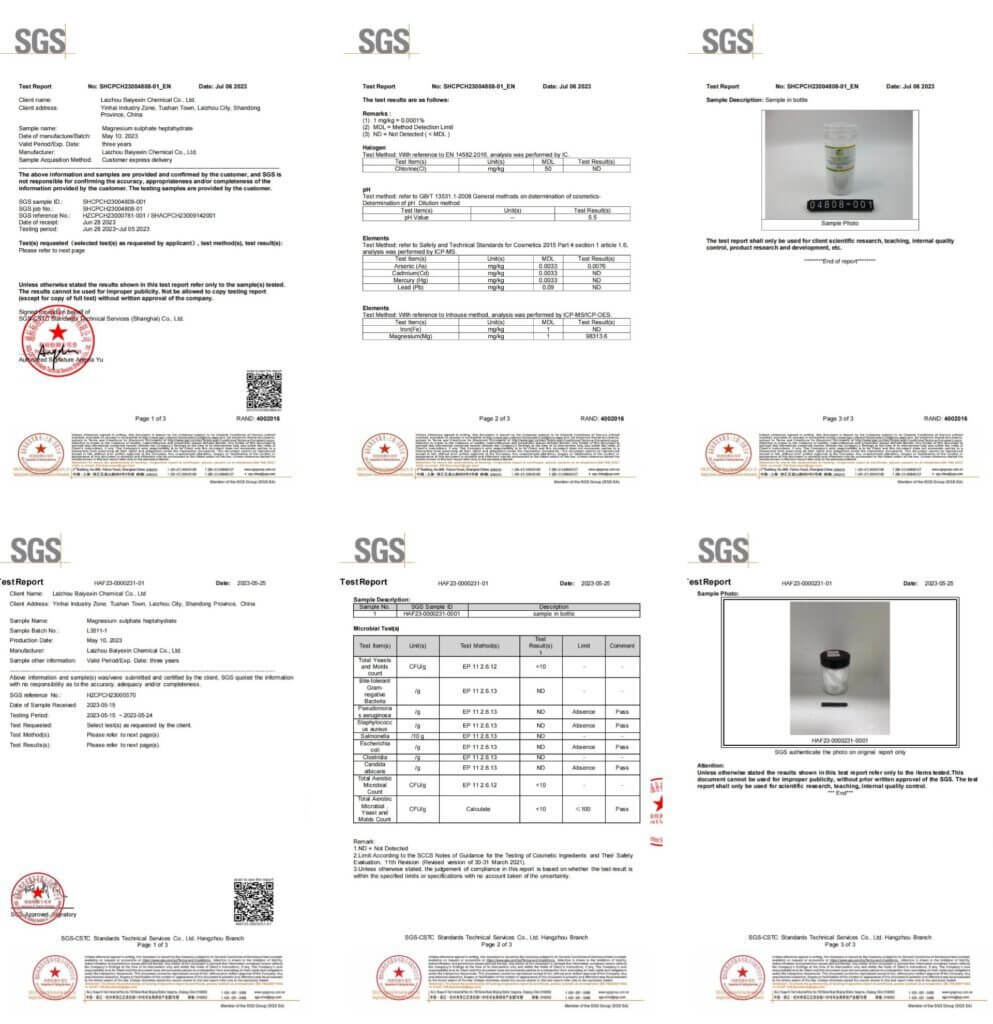
Magnesium Sulfate Monohydrate Examining Report:
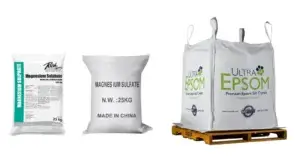
Package type:
Different types of knitted bags are available, comprising of plastic liners in the following categories: PE bag, Valve Bags, Jumbo bag; 25kg, 50kg, 600kg, 1000kg, 1200kg per bag.
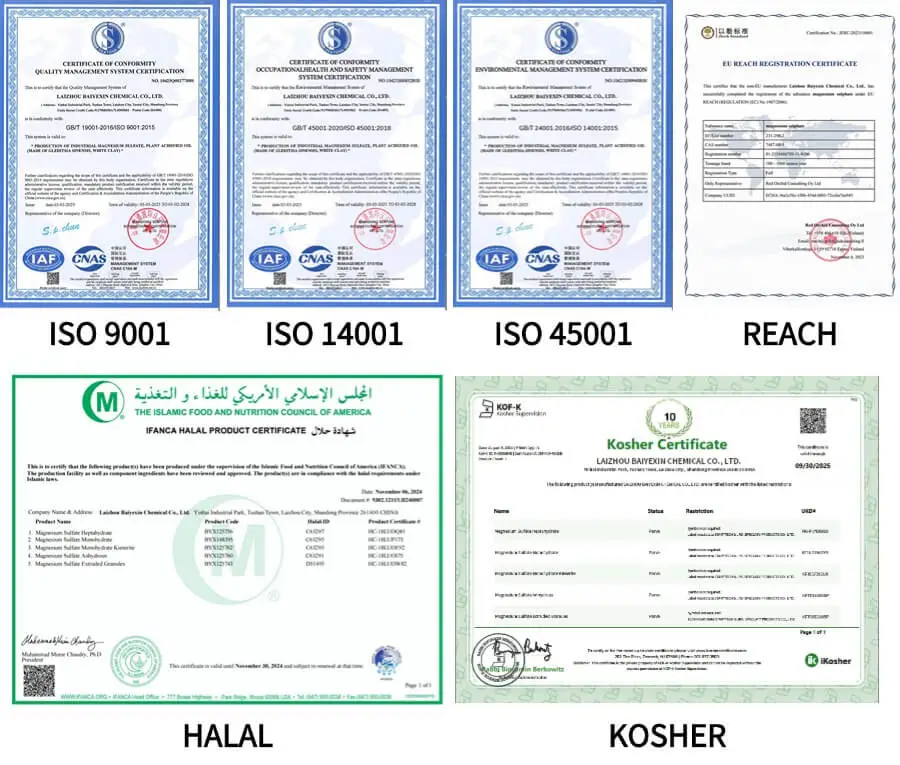
Certification:
Factory Picture:
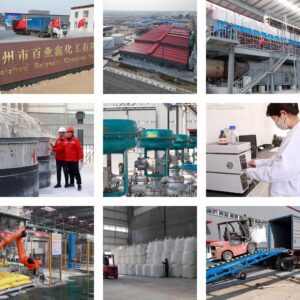
Magnesium sulfate monohydrate (MgSO₄·H₂O) is a hydrated form of magnesium sulfate, widely utilized in industries such as agriculture, animal feed, pharmaceuticals, and manufacturing. This article systematically explores its fundamental properties, preparation methods, applications, safety considerations, and market dynamics, with a special focus on the competitive advantages of products from Laizhou Baiye Xin Chemical Co., Ltd.
Key Takeaways
- Magnesium sulfate monohydrate basic Information.
- Preparation Method.
- Applications.
- Safety and Storage.
- Market and Price.
- Laizhou Baiyexin Chemical
Ⅰ.What is Magnesium Sulfate Monohydrate?
1. Introduction to the basic aspects of Magnesium Sulfate Monohydrate: Chemical Properties, Physical Characteristics, and Stability
Magnesium sulfate, which is the monohydrate version of magnesium sulphate, finds various uses in the field of chemistry and advanced manufacturing or industrial processes because of its numerous interesting properties. In this context the article presents the features of this compound, methods of its synthesis, scope of its application, safety when working with the material, precautions when storing and handling, b2b market and other related issues of this compound.
Chinese Aliases: Magnesium sulfate monohydrate, magnesium sulfate (1:1) monohydrate, feed-grade magnesium sulfate monohydrate, kieserite, bitter salt.
English Name: Magnesium sulfate monohydrate.
Common Aliases: MgSO₄·H₂O (abbreviation), monohydrate magnesium sulfate, kieserite (mineralogical name).
Magnesium Sulfate Monohydrate CAS Number: 14168-73-1.
Magnesium Sulfate Monohydrate EC Number: 231-298-2.
Magnesium Sulfate Monohydrate HS Code: 28332100 (China Customs Code for magnesium sulfate products).
Magnesium Sulfate Monohydrate Chemical Formula: MgSO₄·H₂O.
Magnesium Sulfate Monohydrate Molecular Weight: 138.39 g/mol (calculated as: Mg (24.31) + S (32.06) + 4O (64.00) + H₂O (18.02)).
1.2 Molecular Structure and Crystal Form Differences
(1) Key Features of the Molecular Structure
Magnesium sulfate monohydrate has an orthorhombic crystal form where all the water molecules in the crystal structure are regularly spaced.
- Coordination Mode: In the given crystal structure, the Mg²⁺ which is the central metal ion bears a coordination number of six where one water molecule oxygen in five coordination sites of SO₄²⁻ thus forming a “Mg-O-H” stabilization layer in the very heart of the structure.
- Lattice Arrangement: The SO₄²⁻ tetrahedral group is attached with water and side soil grains through hydrogen bonding making the layered structure compact. As a result, its' crystal density will be quite large compared with seven hydrate of magnesium sulfate.
(2) Structural Differences with Other Magnesium Sulfate Forms
Here is a summary of the key structural differences between magnesium sulfate monohydrate, magnesium sulfate heptahydrate (MgSO₄·7H₂O), and magnesium sulfate anhydrous (MgSO₄):
| Crystal Form | Water Molecules | Crystal Structure | Coordination Environment (Mg²⁺) | Lattice Spacing (Å) | Density (g/cm³) |
|---|---|---|---|---|---|
| Magnesium Sulfate Monohydrate | 1 | Orthorhombic | 6-coordinate (1H₂O + 5SO₄²⁻) | a=6.36, b=10.20, c=4.92 | 2.45 |
| Magnesium Sulfate Heptahydrate | 7 | Monoclinic | 6-coordinate (6H₂O + 1SO₄²⁻) | a=11.70, b=11.90, c=6.80 | 1.68 |
| Magnesium Sulfate Anhydrous | 0 | Orthorhombic | 6-coordinate (6SO₄²⁻) | a=8.23, b=10.68, c=6.84 | 2.66 |
Key Differences: Key Differences: How well the lattice is held together is dependent upon the amount of water molecules present. How this applies here is that Heptahydrate has a great number of water molecules, hence a wider lattice to gap; also it is far more hygroscopic. The anhydrous form of magnesium sulfate with a quite dense lattice dissolves slowly while the monohydrate form is somewhere between stable and soluble.
1.3 Physical Parameters: Appearance and Physicochemical Properties
(1) Magnesium Sulfate Monohydrate Appearance and Morphology
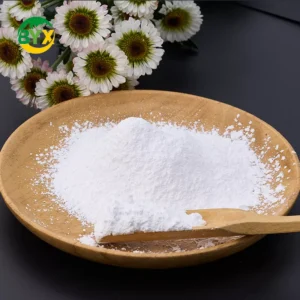
- Color: Often depicted as Pure White (for high purity of the material); greyish-white color might be observed in the wide industry products-containing trace impurities.
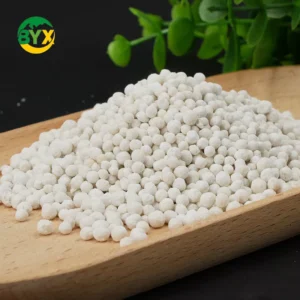
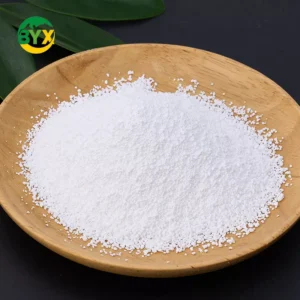
- Granulometry: Granules of a predominantly even shape 20 to 100 mesh are either stocked or produced to order in the form of powders.
- Particle size: Industrial-40-80 mesh, usable as a fertilization/mixing aid; feed-60-100 mesh, suitable for animal rearing, and reagent ≥120 mesh to ensure dissolution is even.
(2) Magnesium Sulfate Monohydrate Density and Thermal Properties
- Crystal Density: 2.45 g/cm³ (25 degrees Celsius).
- Bulk Density: Depending on the manufacturing method, granular density ranges from 0.8 to 1.2 g/cm³, and powder density varies from 0.6 to 0.9 g/cm³.
- Melting and Decomposition: On heating, contained water is lost in the form of water of crystallization until completely dehydrated at 150-200°C and converted to anhydrous magnesium sulfate. It further on continues to decompose at Continuous level of 1124 degrees C. in the presence of water which changes into magnesium oxide, Sulfur dioxide as well as Sulfur trioxide without any degenerations as the process of dehydration or decomposition is melting free.
- Boiling Point: No actual boiling point; decomposes continuously at high temperatures, with MgO as the final product (above 800°C).
(3) Magnesium Sulfate Monohydrate Solubility and Hygroscopicity
- Solubility (25°C):
- Water: 26.2 g/100mL (dissolves quickly, fully soluble within 30 seconds).
- Ethanol: <0.1 g/100mL (insoluble).
- Glycerol: 1.5-2.0 g/100mL (slightly soluble).
- Acetone: Virtually insoluble.
- Heat of Dissolution: +13.8 kJ/mol, meaning that the process is endothermic and, therefore, the temperature of the solution will drop .
- Hygroscopicity Comparison:
- Given the prevailing climatic temperature and moisture content at 25°C and 60% RH, the 24-hour moisture absorption rate is as follows:
- Heptahydrate: This material is highly hygroscopic (15-20%).
- Monohydrate: This material is not so much hygroscopic (2-3%).
- Anhydrous: This material is not hygroscopic at all (0.5-1%).
- The minimal hygroscopicity of magnesium sulfate monohydrate makes it an ideal material for long-term storage.
- Given the prevailing climatic temperature and moisture content at 25°C and 60% RH, the 24-hour moisture absorption rate is as follows:
Table: Comparison of Key Characteristics of Magnesium Sulfate Forms
| Property | Magnesium Sulfate Monohydrate (MgSO₄·H₂O) | Magnesium Sulfate Heptahydrate (MgSO₄·7H₂O) | Magnesium Sulfate Anhydrous (MgSO₄) |
|---|---|---|---|
| Molecular Weight | 138.38 | 246.47 | 120.37 |
| Appearance | White powder or colorless monoclinic crystals | Colorless transparent crystals | White powder |
| Density (g/mL) | 2.57 (25°C) | 1.68 | 2.66 |
| Melting/Decomposition Point | 150°C (decomposes) | ~50°C (loses some water) | ~1124°C (decomposes) |
| Hygroscopicity | Low, stable in dry air | High, prone to deliquescence | Strong hygroscopicity |
| Magnesium Content (Mg) | ~17.6% | ~9.9% | ~20.2% |
1.4 Chemical Stability and Reactivity
(1) Chemical Stability
- Ambient Conditions: Stable, non-hygroscopic, non-deliquescent (at humidity ≤60%), and non-oxidizing.
- Thermal Decomposition: Loses water in stages:
- 100-150°C: Partial loss of free water.
- 150-200°C: Complete loss of water, forming anhydrous magnesium sulfate.
- 200-800°C: Anhydrous magnesium sulfate remains stable.
-
800°C: Decomposes into MgO + SO₃ (primary) or MgO + SO₂ + ½O₂ (secondary).
(2) Typical Chemical Reactions
Based on the properties of Mg²⁺ and SO₄²⁻, typical reactions include:
| Reaction Type | Reactant | Reaction Equation | Observations |
|---|---|---|---|
| Reaction with Base | NaOH solution | MgSO₄·H₂O + 2NaOH = Mg(OH)₂↓ + Na₂SO₄ + H₂O | White flocculent precipitate (Mg(OH)₂) |
| Reaction with Barium Salt | BaCl₂ solution | MgSO₄·H₂O + BaCl₂ = BaSO₄↓ + MgCl₂ + H₂O | White precipitate insoluble in acid (BaSO₄) |
| Reaction with Carbonate | Na₂CO₃ solution | MgSO₄·H₂O + Na₂CO₃ = MgCO₃↓ + Na₂SO₄ + H₂O | White powdery precipitate (MgCO₃) |
Ⅱ. Preparation Processes for Magnesium Sulfate Monohydrate: Industrial and Laboratory Methods
2.1 Industrial Preparation Routes
The process of magnesium sulfate monohydrate production is largely dependent on "raw material adaptability". The prominent process routes are four thus:
| Process Route | Raw Material Requirements | Core Steps | Reaction/Operating Conditions | Advantages | Disadvantages |
|---|---|---|---|---|---|
| Controlled Dehydration of Heptahydrate | Heptahydrate (purity ≥98%, Ca²⁺ <0.5%) | 1. Crush heptahydrate; 2. Controlled dehydration (120-180°C); 3. Sieve; 4. Package | 150±10°C, ambient pressure, 2-3h | Readily available raw material, high purity (≥99%) | High energy consumption, dependent on heptahydrate price |
| Salt Lake Brine Concentration | Brine (Mg²⁺ ≥20g/L, Cl⁻ <50g/L) | 1. Impurity removal (add Na₂CO₃ to remove Ca²⁺); 2. Evaporation (40-60°C); 3. Crystallization; 4. Drying | 45±5°C, vacuum -0.08MPa, pH 6-7 | Low cost, renewable raw material | Geographically limited, higher impurities |
| MgO-Sulfuric Acid Reaction | Light MgO (purity ≥95%, Fe³⁺ <0.1%), 98% sulfuric acid | 1. Reaction (MgO + H₂SO₄ = MgSO₄ + H₂O); 2. Filter impurities; 3. Concentrate; 4. Dry | 80-90°C, pH 5-6, 1-2h | High purity (≥99.5%), pharmaceutical-grade | High raw material cost, wastewater treatment required |
| Industrial Byproduct Recovery | Steel pickling wastewater (Mg²⁺, Fe³⁺), phosphate fertilizer byproduct | 1. Neutralize wastewater (add Ca(OH)₂ to remove Fe³⁺); 2. Precipitate impurities; 3. Concentrate and crystallize; 4. Dehydrate | 60-70°C, pH 7-8, 4-6h precipitation | Environmentally friendly, low cost | Variable purity (95-98%), requires deep purification |
Due to cost-effectiveness, stability in the supply of the raw materials, available technology, and purity of the end product, the thermal dehydration of the heptahydrate is a rather popular industrial method.
2.2 Dehydration Process Comparison
The role of dehydration in magnesium sulfate monohydrate production is crucial as it has a direct impact on the cost of production and the quality of products. The variations are this:
| Dehydration Process | Energy Consumption (kW·h/ton) | Purity (MgSO₄·H₂O Content) | Crystal Morphology | Environmental Impact (Wastewater/Gas) | Applicable Scenarios |
|---|---|---|---|---|---|
| Low-Temperature Hot Air Drying | 800-1000 | 98-98.5% | Powdery, moderate uniformity | No wastewater, minimal gas | Small-scale, industrial-grade |
| Vacuum Belt Drying | 500-600 | 99-99.5% | Granular, good flowability | No wastewater, zero gas emissions | Medium/large-scale, feed/pharmaceutical-grade |
| Fluidized Bed Drying | 400-500 | 98.5-99% | Granular, controllable size | No wastewater, minimal gas | Large-scale, industrial-grade granules |
The low energy consumption, purity, positive system and best quality grain structure have made conveyor drying the optimal choice for feed and pharmaceutical applications.
For the production of huge industrial products like flame retardants and fertilisers, it is appropriate to employ the drying system of the fluidized bed.
2.3 Laboratory Preparation Method
Synthesis in the laboratory of magnesium sulfate monohydrate in small amounts (100-500g) is described below where emphasis is placed on simple steps and the maintenance of precise temperature:
- Raw Material: Add 100g of a heptahydrate of analytical-grade sample into a porcelain dish for evaporation.
- Controlled Dehydration: The dish and its content should be placed in an oven, temperature set at 150°C and left for 2 hours ( very important - not more than 180°C otherwise it will convert the hydrated salt into magnesium sulfate which is anhydrous).
- Moisture Protection: Now immediately transfer the material to a desiccator filled with anhydrous CaCl₂ to allow ambient cooling of the product without it absorbing any moisture.
- Purification: In order to achieve highly pure grades, the hydration product should be dissolved in pure water in one is to five ratio, peroxide added to remove iron ions, sodium carbonate added to remove calcium ions, then filtered concentrated and re-dried to obtain purity greater than 99.8%.
2.4 Impurity Control and Purity Standards
(1) Common Impurities and Removal Methods
| Impurity | Source | Removal Method |
|---|---|---|
| Ca²⁺ | Heptahydrate, brine | Pre-treatment with Na₂CO₃ to form CaCO₃ precipitate; slow cooling to reduce co-precipitation |
| Fe³⁺ | Byproduct recovery (pickling wastewater) | Ion exchange resin adsorption; precipitate as Fe(OH)₃ with Ca(OH)₂; oxidize with H₂O₂ and precipitate |
| Cl⁻ | Brine, pickling wastewater | Add Ag₂SO₄ to form AgCl precipitate; control pH during evaporation to minimize Cl⁻ residue |
| Na⁺ | Impurity removal reagents (Na₂CO₃, NaOH) | Multiple recrystallizations; wash with dilute magnesium sulfate solution to avoid Mg²⁺ loss |
(2) Purity Grade Process Differences
| Purity Grade | Process Differences | Key Specifications (MgSO₄·H₂O Content/Impurity Limits) | Standard |
|---|---|---|---|
| Industrial | Simplified impurity removal, fluidized bed drying, no precision filtration | ≥98%; Ca²⁺ ≤0.3%, Fe³⁺ ≤0.01%, Cl⁻ ≤0.1% | GB/T 26568-2011 |
| Feed | Vacuum belt drying, ion exchange impurity removal, heavy metal testing | ≥99%; Ca²⁺ ≤0.2%, Fe³⁺ ≤0.005%, Pb²⁺ ≤0.001% | GB/T 26451-2011 |
| Pharmaceutical | MgO-sulfuric acid reaction, multiple recrystallizations, sterile drying, GMP control | ≥99.5%; Ca²⁺ ≤0.1%, Fe³⁺ ≤0.001%, heavy metals ≤0.0005% | USP, EP, or Chinese Pharmacopoeia 2020 |
| Reagent | Analytical-grade raw materials, ultrapure water dissolution, precision filtration, vacuum drying | ≥99.8%; Ca²⁺ ≤0.05%, Fe³⁺ ≤0.0005%, Cl⁻ ≤0.005% | USP, EP, or GB/T 671-2011 |
Ⅲ. Applications of Magnesium Sulfate Monohydrate: Multi-Industry Scenarios and Advantages
3.1 Agriculture: The Core Choice for Efficient Magnesium Fertilizer
(1) Advantages Compared to Other Magnesium Fertilizers
Magnesium sulfate monohydrate is capable of providing water soluble benefits of Magnesium (Mg) and sulfur (S) to the plants. Magnesium is an important element in chlorophyll for its photosynthetic properties while sulfur is a constituent of amino acids and enzymes – a perfect blend making it one of the best available magnesium fertilisers with many added benefits:
- Dissolution Efficiency: It takes approximately five times the dissolution time of magnesium oxide and twice the dissolution time of anhydrous magnesium sulfate at 25°C. As a result of this, crops utilising this fertiliser absorb it within a day or two of applying it to the soil.
- Absorption Efficiency: The crop uptake goes beyond 80% (as compared to about 70% for heptahydrate and 50 % for magnesia aside) thanks to its readily dispersible granule state and the broad surface area of the soil for contact.
- Supply of Fertilizer Duration: 30-45 days effective (20-25 days in the case of heptahydrate, 50-60 days in the case of anhydrous). It is a dual-action mechanism in which the rate of action and the release of the action are offered.
- Anti-Deliquescence: does not cake during storage, and does not require crushing during application in the field. This is due to the fact that it is applied without any grinding cost.
(2) Applicable Crops and Soils
- Core Crops: High-magnesium-demand crops like citrus (prevents magnesium deficiency yellowing), grapes (enhances sugar accumulation), rice (improves lodging resistance), tomatoes (reduces fruit cracking), and tea (improves flavor).
- Suitable Soils: Acidic (pH 4.5-6.5) and neutral soils (pH 6.5-7.5). Not suitable for highly alkaline soils (pH >8.0, where Mg(OH)₂ precipitation occurs).
(3) Magnesium Sulfate Monohydrate Application Methods and Dosage
| Application Method | Scenario | Dosage | Notes |
|---|---|---|---|
| Base Fertilizer | Pre-sowing/transplanting soil improvement | Field crops (rice/wheat): 10-15 kg/mu; cash crops (citrus): 15-20 kg/mu | Follow with organic fertilizer to improve dispersion. |
| Topdressing | Crop growth stage (e.g., citrus fruit expansion) | 5-8 kg/mu, diluted 200x for root irrigation | Refrain from using at the same time with phosphate fertilizers to avoid precipitation of Mg₃(PO₄)₂. |
| Foliar Spray | Emergency magnesium supplementation (e.g., leaf yellowing) | 0.2-0.5% concentration (200-500g/100L water), applied every 7-10 days, 2-3 times | Spray out in the evening to avoid evaporation loss. |
Moreover, it may also function as a slow-release fertilizer of magnesium when combined with slow release resins or humic acid, an application mainly suitable to greenhouse tomato production.
3.2 Feed Industry: Essential Magnesium Source for Livestock and Aquaculture
(1) Core Functions: Physiological Role of Magnesium
Magnesium is concerned with maintaining optimal neuromuscular activity and enabling efficient energy usage in animals. Magnesium sulfate monohydrate is among the many feed components used:
- Promotes Growth: Increases percentage of lean meat in piglets (decreases fat deposition in the body) and enhances weight gain in broilers (increases feed efficiency by 10-15%).
- Maintains Nerve Function: Acts as prophylactic for magnesium deficiency in HML cows (milk fever) as well as helps to fight stress in fish/shrimps (20% mortality during transport decreased).
- Improves Digestion: Aids in the movements of the forestomach of ruminants (cows, sheep etc.) preventing disorders.
(2) Industry Standards and Addition Rates
- Mandatory Standard: Has to include GB /T 26451-2011 (feed additive magnesium sulfate monohydrate) with the heavy metal content permissible for consumption in which lead, arsenic and mercury do not exceed 0.001% and fluoride content does not exceed 0.005%.
- Typical Addition Rates:
| Animal Type | Addition Rate (% of dry feed) | Recommended Form | Notes |
|---|---|---|---|
| Pigs (fattening) | 0.1-0.3% | 60-80 mesh powder | Ration as evenly as you can with corn/soy meal to prevent high local excesses of the concentration value of the additive. |
| Broilers (white feather) | 0.05-0.2% | 80-100 mesh powder | It should not be mixed with the feeding stuff of high calcium content (Ca greater than 1.5 %) in the diet to avoid absorption blockade。 |
| Dairy Cows (lactation) | 0.2-0.4% | Granular | Improve the safety during the administration of feed by filling up with pasture. |
| Fish/Shrimp (grass carp/shrimp) | 0.15-0.3% | Micro-powder (120 mesh) | It can be disbursed in water and thrown about or added in compound feed. |
Note: To prevent the formation of high local concentrations which could lead to diarrhea, it is important to mix the substances as evenly as possiblez substances well. However, it is always recommended to monitor the information especially concerning any possible adverse effects, clinical applications, alleviation of dilution damage and interactions for example with vitamins, mineral supplements and other drugs for example antibiotics like Tetracyclines.
3.3 Industrial Applications: From Flame Retardants to Building Materials
(1) Flame Retardants: Safety Barrier for Polymers
Magnesium sulfate monohydrate serves as an inorganic flame retardant by means of “heat absorption and oxygen isolation”:
- Principle: When the temperature goes above 150°C, the hydration of the crystal structure takes place leading to the absorption of an amount of 18kJ/mol heat which consequently decreases the temperature of the external material. As result of the reaction, a thick layer of anhydrous magnesium sulfate and MgO is formed, acting as a protective barrier from oxygen to the combustibles.
- The Good Candidates: PVC (cables and pipes) epoxy resin (circuit boards), polypropylene (plastic cases).
- Technical Demands: minimum purity index 98%, particle size within the range 40-60 mesh (easy to dispersion), effective usage levels 10-20% (15% loading to PVC brings oxygen indices up from 24% to 32%).
(2) Paper Industry: Sizing Agent and Filler
- Sizing Agent: Incorporated with gum rosin to enhance the paper’s water resistance (with a contact angle in the range of 60° to 90°) and decrease ink absorption.
- Filler: Partially replaces talc, thus decreasing the costs and at the same time enhancing whiteness from 85% to 88% and improving strength by the tensile strength increase of 5-8%.
- Standards: Not less than 97% of the purity, meshes 80–100, and 5–8% (in terms of weight of dry pulp) of the chemical is added.
(3) Building Materials: Solution to Halogen Return in Magnesia Boards
The Magnesia boards (grade Mgo + Mgo + additives) can easily undergo halogen return or efflorescence formation problems due to the ability of Mgo to absorb water. Between 30 to 50 percent of the Mgo can be replaced with Magnesium Sulfate Monohydrate:
- Mechanism: Decreases Cl⁻ content of the cement therefore reducing its water absorption; Mg cations are formed in the so-called “5·1·8” phase formation (Mg 5 (OH) 2 (CO 3) 4.4H20) which also assists in improving the water resistant properties.
- Technical Requirements: ≥98% pure magnesia mixture, moisture content free water not more than 1%, dose amount 10-15% of the weight of magnesia cement.
3.4 Pharmaceutical and Other Applications: Niche but Critical Uses
(1) Pharmaceuticals
- Oral Use: Help with constipation pretreatment bowel cleaning, it is recommended to take between 5 and 10 grams of the hydroxy or 20 g of the heptahydrate since the amount of active ingredients is bigger.
- Topical Use: Solution of 20 percent – 30 percent is used for wet dressings for curing of soft tissues (for example traumas, varix).
- Contraindications: It is not allowed for patients who are renal compromised (magnesium build up). Excessive use may also result in water loss and salts depletion (hypokalemia).
(2) Other Applications
- Cosmetics: To control oil on skin via this agent is something which is used at a proportion of 0.5-2%. This agent functions by absorbing the skin oils. Best used in skin products that aim to oily skin is, the agent is also an emulsifier and foam extender, prevents emulsification.
- Water Treatment: Used for phosphate removal through precipitation of Mg₃(PO₄)₂, mitigates the issue of eutrophication, recommended dosage 50–100mg/L.
- Research: Used where high purity is required as an analytical reagent (for example, in EDTA titration or as a source of Mg²⁺ in microbial medium) having a reagent grade of not less than 99.8% purity.
- Food Industry: Is present in foods (rated as a coagulant, fermentation aid or mineral fortifier) in compliance with GB No29207-2012 guidelines that specify use in yeast cultures, brewing or water hardness.
Ⅳ. Safety and Storage: Operational Standards and Management
4.1 Safety Classification and Hazard Analysis
Hazardous Chemical Classification: It is not included in the 2022 Catalog of Hazardous Chemicals, it is neither corrosive nor inflammable, and is not prone to explosion.
Magnesium Sulfate Monohydrate MSDS Hazard Description:
- Contact with the skin: When contact is long, it may cause dry skin (as it is hygroscopic), no symptoms of redness or irritation.
- Risks of inhalation: If the concentration of the dust >10mg/m3, it may lead to respiratory tract irritation and cause coughs (nontoxic).
- Hazard of Ingestion: If a person swallows more than 50 grams of the substance, there will be a couple of things that may occur namely vomiting and diarrhea (following the hydrostatic isomechanical irritation of the magnesium ions); when a child is exposed to over 10 grams, it is not dangerous but needs medical intervention.
4.2 Operational Protection and Environmental Requirements
(1) Personal Protective Equipment
| Operation | Essential PPE | Recommended PPE |
|---|---|---|
| Production (crushing/drying) | N95 dust mask, nitrile gloves | Safety goggles, anti-static workwear |
| Transport (loading/unloading) | Basic dust mask, anti-slip gloves | Safety helmet |
| Use (fertilization/mixing) | Basic gloves, mask | Protective clothing |
(2) Work Environment Requirements
- Ventilation: It is suggested that the working place air should be changed at the rate of three times an hour. Dust particularize should not exceed 10mg /m3.
- Humidity: Relative humidity in the storage and operation rooms should be kept ≤60% in order to prevent caking.
- Fire/Explosion Prevention: This product is non-flammable and requires no special fire precautions however, smoking should be prohibited in the working areas to avoid the ignition of dust.
4.3 Magnesium Sulfate Monohydrate Storage Conditions and Shelf Life
- Temperature: Please keep it between 5 and 35°C and avoid direct sunlight.
- Humidity: Maintain the store at less than 60 percent humidity and use a dry and airy warehouse which is 10 cms above the ground to avoid moisture contact.
- Packaging: Use polyethylene drums or aluminum-plastic bags with cap sealing to avoid moisture but not iron drums where trace iron ions might be adsorbed hence diminishing the level of purity.
- Isolation: Should also be stored at least a meter away from substances classified as acids or bases (example sulfuric acid, sodium hydroxide) and food/feed to avoid contamination.
- Shelf Life: 6 to 12 months when stored in conditions with airtight lock in good order.
- Expired/Caked Product: If the product has expired or has caked, it is possible to crush it and dry it in 100-120 degrees centigrade for 2 hours, however, 5 to 10 percent of the performance is compromised (still, can be used). Products with discoloration such as green and black may not be used due to the presence of microorganisms such as fungi or contaminants.
4.4 Emergency Handling and Waste Disposal
(1) Magnesium Sulfate Monohydrate Leakage Handling
- Solid Spillage: One should sweep the area using a broom made of plastic and not metal, lest one causes a spark. Consequently, the material should be bagged, sealed, and dried for subsequent use.
- Dust Dispersion: Protection via ventilation and N95 mask should be employed while the dust is carried away with a negative pressure vacuum rather than blowing which will cause it to spread.
- Water/Acid Contact: There is no dangerous reaction; the spilled material is dried and collected.
(2) Fire Handling
- Extinguishing: In case of fire, water should be used where possible, otherwise, other extinguishing agents such as powder or carbon dioxide may be used.
- Precautions: In addition, because particles from other burning substances do affect breathing, especially during firefighting, dust masks must be worn.
(3) Waste Disposal
- Wastewater: Production washing water under acidic pH (5-7) will be neutralized to discharge between pH 6-9 to meet the GB 8978-1996 standard.
- Waste Material: Substandard products or dust can be reprocessed without secondary pollution.
- Waste Gas: The water vapor that is produced during drying as it is noted, contains no pollutant; it may be disposed outwardly straightforwardly without treatment.
Ⅴ. Comparative Analysis: Advantages and Applications of Magnesium Sulfate Monohydrate
5.1 Core Differences with Heptahydrate and Anhydrous Forms
The advantages of magnesium sulfate monohydrate as a crystal system - often referred to as “balanced,” are very different in features, preparation, and possibilities than heptahydrate and anhydrous forms.
| Dimension | Magnesium Sulfate Monohydrate (MgSO₄·H₂O) | Magnesium Sulfate Heptahydrate (MgSO₄·7H₂O) | Magnesium Sulfate Anhydrous (MgSO₄) |
|---|---|---|---|
| Hygroscopicity | Low (2-3% at RH60%, 24h) | High (15-20%) | Very low (0.5-1%) |
| Chemical Stability | Stable (no weathering at ambient, dehydrates at 150°C) | Less stable (weathers at ambient, dehydrates at 50°C) | Highly stable (no change at ambient, dehydrates at 200°C) |
| Dissolution Speed | Fast (30s at 25°C) | Very fast (10s) | Slow (1-2min) |
| Preparation Complexity | Medium (120-180°C dehydration, precise control) | Low (ambient crystallization) | High (200°C+ dehydration or vacuum drying) |
| Energy Consumption | Medium (500-600 kW·h/ton) | Low (300-400 kW·h/ton) | High (800-1000 kW·h/ton) |
| Production Cost | Medium (850-1600 CNY/ton) | Low (600-1200 CNY/ton) | High (1800-3500 CNY/ton) |
| Applications | Stable storage, moderate dissolution (agriculture, feed, flame retardants) | Instant dissolution, low cost (pharmaceuticals, temporary fertilizers, bath salts) | Long-term moisture resistance, high stability (desiccants, high-end flame retardants, battery additives) |
Application Recommendations:
- Agriculture: It is better to store magnesium sulfate in a long-term monohydrate form; during emergencies in a heptahydrate form; and rarely in an anhydrous form.
- Industrial Drying: Anhydrous is used because of high humidity, while monohydrate is for intermediate humidity.
- Feed: Magnesium sulfate monohydrate has low hygroscopicity and good solubility, therefore it is superior.
- Pharmaceuticals: In case of oral laxatives, heptahydrate or monohydrate; in terms of topical agents in order to decrease swelling, heptahydrate is preferable.
5.2 Agricultural Comparison with Other Magnesium Fertilizers
| Fertilizer Type | Dissolution Speed (25°C) | Crop Absorption Rate | Soil pH Impact | Long-Term Soil Impact | Cost per Mg Content (CNY/kg Mg) |
|---|---|---|---|---|---|
| Magnesium Sulfate Monohydrate | Fast (30s) | 80-85% | Neutral | No compaction/salinization | 8.5-10.0 |
| MgO | Very slow (2-4h) | 40-50% | Alkaline (pH +0.5-1.0) | Compaction (high pH) | 6.0-7.5 |
| MgCl₂ | Fast (20s) | 75-80% | Neutral | Salinization (Cl⁻ accumulation) | 7.0-8.5 |
| Mg(NO₃)₂ | Very fast (15s) | 85-90% | Slightly acidic (pH -0.2-0.3) | No significant impact | 15.0-18.0 |
- Advantages: Magnesium Sulfate Monohydrate has the benefits of being highly absorbable, does not have any negative effects on the soil and is of moderate cost, which is suitable for cash crops like citrus and grapes.
- Disadvantages: The amount paid per exact amount of magnesium is higher than in MgO or MgCl₂; not suitable in heavily alkaline soils.
5.3 Industrial Comparison with Other Flame Retardants
| Flame Retardant | Efficiency (15% Addition, Oxygen Index Increase) | Polymer Compatibility (PVC/Epoxy) | Processing Flowability | Cost (CNY/ton) |
|---|---|---|---|---|
| Magnesium Sulfate Monohydrate | 5-7% (24%→30%) | Excellent (no precipitation, transparent) | Good (granules, needs premixing) | 1600-2200 |
| ATH | 8-10% (24%→32%) | Good (precipitation at high addition) | Moderate (requires modification) | 2500-3000 |
| MDH | 7-9% (24%→31%) | Good (high-temperature resistant) | Moderate (requires surface treatment) | 3000-3500 |
| Anhydrous MgSO₄ | 4-6% (24%→29%) | Excellent | Excellent (powder disperses easily) | 2000-3000 |
Recommendations: I would suggest using magnesium sulfate monohydrate in low to medium usage rates; ATH/MDH should be used only in cases were high flame-retardant properties are required; whereas anhydrous should be used in high-tech products.
5.4 Environmental Comparison
| Stage | Monohydrate | CaCl₂ | ZnSO₄ | CaSO₄ |
|---|---|---|---|---|
| Production | Medium energy (500 kW·h/ton), low wastewater | High energy (1200 kW·h/ton), Cl⁻ wastewater | High energy (800 kW·h/ton), Zn²⁺ wastewater | Low energy (300 kW·h/ton), no wastewater |
| Use | No residue in agriculture, no toxic byproducts | Soil salinization, metal corrosion | Zn²⁺ accumulation (toxic) | No agricultural effect |
| Disposal | Biodegradable (Mg²⁺ absorbed by plants) | Non-degradable (Cl⁻ pollutes water) | Hard to degrade (Zn²⁺ soil pollution) | Non-degradable (no harm) |
| Environmental Rating | ★★★★☆ | ★★☆☆☆ | ★★★☆☆ | ★★★★☆ |
In conclusion, it can be said that Magnesium Sulfate Monohydrate is quite safe and economically friendly. It surpasses even calcium chloride and zinc sulfate in this respect, making it most favorable for a wide variety of industrial applications.
Ⅵ. Purity and Quality Control: Standards and Identification
6.1 Purity Grades and Quality Standards
| Grade | Application | MgSO₄·H₂O Content | Impurity Limits | Standard |
|---|---|---|---|---|
| Industrial | Flame retardants, paper fillers | ≥98.0% | Ca²⁺ ≤0.3%, Fe³⁺ ≤0.01%, Cl⁻ ≤0.1%, moisture ≤1.0% | GB/T 26568-2011 |
| Feed | Livestock/aquaculture additives | ≥99.0% | Ca²⁺ ≤0.2%, Fe³⁺ ≤0.005%, Pb²⁺ ≤0.001%, As ≤0.0002% | GB/T 26451-2011 |
| Food | Coagulant, stabilizer | ≥99.2% | Ca²⁺ ≤0.1%, Fe³⁺ ≤0.003%, Pb²⁺ ≤0.0005%, Hg ≤0.0001% | GB 25588-2010 |
| Pharmaceutical | Laxative, swelling relief | ≥99.5% | Ca²⁺ ≤0.1%, Fe³⁺ ≤0.001%, heavy metals ≤0.0005% | Chinese Pharmacopoeia 2020, USP 43 |
| Reagent (AR) | Lab analysis, culture media | ≥99.8% | Ca²⁺ ≤0.05%, Fe³⁺ ≤0.0005%, Cl⁻ ≤0.005% | GB/T 671-2011 |
| Reagent (GR) | Precision analysis, research | ≥99.9% | Ca²⁺ ≤0.005%, Fe³⁺ ≤0.0001%, Cl⁻ ≤0.001% | GB/T 671-2011 |
Laizhou Baiyexin Advantage: The purity of Feed-grade magnesium sulfate monohydrate is 99.2%-99.5%, the concentration of the Pb²⁺ ion is less than or equal to 0.0008% ad that of As – 0.0001%. These values exceed the values stated in Gb/t 26451-2011. The sterilization criteria established in the USP 43 and Chinese Pharmacopoeia are met in the manufacture of pharmaceutical-grade solutions.
6.2 Magnesium Sulfate Monohydrate Purity Identification and Fraud Detection
(1) Physical Identification
| Test | Procedure | Genuine Monohydrate | Fraud Indicators |
|---|---|---|---|
| Hygroscopicity | 10g sample at 25°C, RH60%, 24h | Weight gain 0.2-0.3g, no caking | Heptahydrate: 1.5-2.0g gain; anhydrous: ≤0.1g; CaSO₄: 0.1-0.2g, hard caking |
| Dissolution Clarity | 5g in 100mL deionized water, settle 30min | Clear solution, no turbidity | CaSO₄: Turbid, white precipitate |
| Density | Measure with pycnometer at 25°C | 2.43-2.47 g/cm³ | Heptahydrate: 1.65-1.70 g/cm³; anhydrous: 2.60-2.70 g/cm³; CaSO₄: 2.95-3.00 g/cm³ |
(2) Chemical Identification
- Mg²⁺ Detection: Add 2mol/L NaOH to sample solution; white Mg(OH)₂ precipitate forms, insoluble in excess NaOH (distinguishes from Al³⁺). Low precipitate indicates CaSO₄ adulteration.
- SO₄²⁻ Detection: Add 0.1mol/L BaCl₂; white BaSO₄ precipitate forms, insoluble in dilute HCl. Low precipitate suggests MgCl₂ adulteration.
- Cl⁻ Detection: Add 0.1mol/L AgNO₃; no AgCl precipitate. Presence indicates MgCl₂ or industrial byproducts.
(3) Professional Testing
- XRD Analysis: Characteristic peaks at 2θ=15.2°, 20.3°, 28.5° (JCPDS 01-071-2395). Peaks at 11.8°, 23.7° (heptahydrate) or 20.8°, 26.6° (anhydrous) indicate adulteration.
- TGA: Monohydrate shows a 12.9% weight loss at 150-200°C (1 water molecule). Heptahydrate: 51% loss; anhydrous: no loss.
- ICP-MS: Measures Pb, As, Hg. Excess levels (e.g., Pb >0.001%) suggest industrial-grade masquerading as feed/pharmaceutical-grade.
Common Fraud Issues:
- Heptahydrate adulteration: Detected via TGA (51.2% weight loss).
- Anhydrous adulteration: Detected via XRD (no water peaks).
- CaSO₄ adulteration: Detected via dissolution clarity (turbidity) or BaCl₂ precipitation (excess precipitate).
6.3 Procurement Key Indicators
| Application | Priority Indicators | Laizhou Baiyexin Product Features |
|---|---|---|
| Agriculture | 1. MgSO₄·H₂O content; 2. Free moisture; 3. Particle size; 4. Ca²⁺ | 40-80 mesh, free moisture ≤0.5%, Ca²⁺ ≤0.15% |
| Feed | 1. Heavy metals; 2. MgSO₄·H₂O content; 3. Particle size; 4. Microbial count | Pb ≤0.0008%, 60-100 mesh, microbial count ≤100 CFU/g |
| Flame Retardant | 1. Particle size; 2. MgSO₄·H₂O content; 3. Free moisture; 4. Cl⁻ | 20-40 mesh, Cl⁻ ≤0.05% |
| Pharmaceutical | 1. Sterility/purity; 2. Heavy metals; 3. Impurities; 4. Solubility | Sterile, Fe³⁺ ≤0.0005%, 100% soluble |
| Lab Analysis | 1. Purity (AR/GR); 2. Insoluble matter; 3. Trace impurities | GR-grade ≥99.9%, insoluble matter ≤0.001% |
Ⅶ. Standards and Regulations: Compliance Framework
7.1 National and International Standards
(1) Chinese Standards (GB)
| Standard Name | Standard Number | Scope | Key Requirements (Monohydrate) |
|---|---|---|---|
| Industrial Magnesium Sulfate Monohydrate | GB/T 26568-2011 | Industrial-grade | ≥98.0%, Ca²⁺ ≤0.3%, Fe³⁺ ≤0.01% |
| Feed Additive Magnesium Sulfate Monohydrate | GB/T 26451-2011 | Feed-grade | ≥99.0%, Pb²⁺ ≤0.001%, As ≤0.0002% |
| Food Additive Magnesium Sulfate Monohydrate | GB 25588-2010 | Food-grade | ≥99.2%, Pb²⁺ ≤0.0005%, Hg ≤0.0001% |
| Chemical Reagent Magnesium Sulfate Monohydrate | GB/T 671-2011 | Reagent-grade (AR/GR) | AR: ≥99.8%, Fe³⁺ ≤0.0005% |
(2) Magnesium Sulfate Monohydrate International Standards
- USP 43: Appropriate for pharmaceutical applications, with a minimum purity of 99.5% and traces of heavy metals not exceeding 0.0005%.
- EP 10.0: Does not exceed the limits set by USP 43 and includes microbial limits as 1000 CFU/g for aerobic bacteria and 100 CFU/g for yeast and molds.
- EU REACH: Manufacturing volumes of 10 tons or more per year require registration with Laizhou Baiyexin registered: 01-2119584257-46-0000 for Cd as 0.0001%, and Hg as 0.00001%.
- GMP: Needed within the scope of pharmaceuticals and manufacturing such active substances legally.
- FDA: Exportation to the United States is permitted only in the case of safety and effectiveness.
7.2 Trade and Transport Regulations
(1) Import/Export Tariffs
- China Export: The HS 28332100 carries a 0% tariff in 2024 but demands the completion of a customs clearance form and a sanitary certificate for products qualifying as food/pharmaceutical-grade.
- EU Import: Imports are 2.5% taxed and require a REACH relevant registration and an SVHC relevant report.U. S.
- Import: Import duty is 3.7% and food/pharmaceutical grade must be registered with the FDA.
(2) Transport Restrictions
- Classification: Not dangerous as per the International Maritime Code of Dangerous Goods and classified under UN0000, as such no restriction apply.
- Packaging: For transportation by sea only it is recommended to use moisture resistant materials e.g. laminated aluminium foils and shrink wrap.
- Documents: For export purposes provision would include a commercial invoice, a packing note, a quality test certificate and sanitary certificate for food and pharmaceutical standards.
Ⅷ. Market and Development: Global Landscape and Trends
8.1 Magnesium Sulfate Monohydrate Market Size and Capacity Distribution
The projected figures demonstrate that global production of magnesium sulfate monohydrate will be in total worth around $250 million up to 2024, with annual production and consumption of the product being around 500,000 tons and 550,000 tons respectively (about 45% of which occupies the Asia-Pacific region). China is mentioned as having a market size of 1.375 billion CNY with 300,000 tons of production, 350,000 tons of consumption, and 50,000 tons of exports. Key regions: Shandong (200,000t laizhou baiyexin inclusive), Qinghai (100,000t), North America (50t K+S), Europe (80t Giles). Monohydrate represents 15% of magnesium sulphate market and its compound annual growth rate (CAGR) is envisaged at 6% to be particular, associated with such factors as organic farming, increase in feed production, and stringent safety regulations.
Laizhou Baiyexin: The company has a capacity of 50,000 tons per year in ratio of 60% for feed including 25% industrial level and 15% for pharmaceutical or food profile. Activity carries out in 28 provinces of China and 12 other countries.
8.2 Magnesium Sulfate Monohydrate Major Producers and Competitiveness
| Company | Region | Capacity (tons) | Purity | Technical Advantage | 2024 Price (CNY/ton) | Competitiveness |
|---|---|---|---|---|---|---|
| Laizhou Baiyexin | Shandong, China | 50,000 | Feed: 99.2%-99.5%, Industrial: 98.0%-98.5% | Vacuum belt drying, ICP-MS testing | Feed: 1600-1800, Pharma: 3200-3500 | High cost-effectiveness, customized services |
| Qinghai Salt Lake | Qinghai, China | 80,000 | Industrial: 98.0%-98.5% | Low-cost brine, large-scale production | Industrial: 850-950 | Cost advantage, high industrial market share |
| PQ Corporation | USA | 40,000 | Reagent: 99.8%-99.9%, Pharma: 99.5% | Membrane purification, global supply chain | Reagent: 8000-10000, Pharma: 4500-5000 | High-end market leader |
| BASF SE | Germany | 30,000 | Food: 99.2%-99.5% | Zero-wastewater process, brand premium | Feed: 3000-5000 | High-end market leader |
| K+S Group | Germany | 80,000 | Food/Pharma: 99.2%-99.5% | Low-cost brine, large-scale production | Feed: 3000-5000 | High-end market leader |
8.3 Magnesium Sulfate Monohydrate Market Prices and Fluctuation Factors
(1) 2024-2025 Price Range (China)
| Product Type | Purity | Packaging | Price (CNY/ton) | Price (CNY/kg) |
|---|---|---|---|---|
| Industrial | 98.0%-98.5% | 25kg PE bag | 700-950 | 0.7-0.95 |
| Feed | 99.0%-99.5% | 25kg aluminum-plastic bag | 1600-1800 | 1.6-1.8 |
| Food | 99.2%-99.5% | 50kg sealed drum | 2800-3200 | 2.8-3.2 |
| Pharmaceutical | 99.5% | 1kg sterile bag | 3200-3500 | 3.2-3.5 |
| Reagent (AR) | 99.8% | 500g reagent bottle | - | 15-20 |
(2) Magnesium Sulfate Monohydrate Price Fluctuation Factors
- Raw Material Costs: The heptahydrate cost goes up by 100 CNY per ton, the cost of monohydrate rises by 80 CNY per ton. The increase in sulfuric acid prices by 100 CNY/ton will cause the prices to increase by 50 CNY/ton.
- Supply/Demand: The demand increases by 15-20% during the agricultural peak seasons (March-May), and causes price increases by 5-8%. The expansion of the livestock causes a 12% increment in the demand for feed.
- Environmental Policies: The appropriate technologies that have high energy demands are not allowed in China by the “duel carbon” policy, leading to a price increase of 3-5% for the produced goods that utilized little energy-intensive products.
- Transport Costs: South China transport from Shandong costs 150-200 CNY per ton (10% more than last year due to the soaring fuel cost).
8.4 Magnesium Sulfate Monohydrate Technical Trends and Opportunities/Challenges
(1) Technical Trends
Low-Energy Dehydration: Using solar energy to assist vacuum drying with a kerosene energy consumption of 300-350 kWh per tonne of product when compared to drying methods capable of producing such benefits and already piloted in Qinghai Salt Lake.
High-Value Products:
- Nano magnesium sulfate monohydrate size 50-100 nm for cosmetic purposes, adding 5-10 times value.
- Monohydrate with coating for feedstuff, prolongs time of absorption, increases efficiency by 15 %.
Environmental Upgrades: Development of minimum process wastewater (96% wastewater is recycled) already carried out in Laizhou Baiyexin with the ability to reduce wastewater by 12000 tons of water annually.
(2) Opportunities
- Green Agriculture: The increasing demand for monohydrate is brought by the fertilizer cut policy implemented in China (growing 10% annually).
- Feed Industry: The expansion of the global livestock industry leads to the increase of feed-grade demand (8% year on year).
- Emerging Fields: Additives for lithium batteries (30%) and nanosilica in cosmetics (25%).
(3) Challenges
- Raw Material Volatility: Price changing by 20–30% in 2024 shrinks the margin.
- Environmental Costs: Adoption of more stringent rules necessitates spending another 1-2 million CNY on wastewater treatment, driving costs 5-8% upwards.
- Competition: Chelated magnesium based fertilizers (absorb better, cost three times as much) and ATH (more efficient flame-retardant) pose challenges.
Ⅸ. Magnesium Sulfate Monohydrate Packaging: Specifications and Moisture-Proof Design
9.1 Packaging Specifications and Materials
| Packaging Type | Specification | Material | Application | Moisture-Proof Features |
|---|---|---|---|---|
| Small | 500g/1kg | Glass bottle (AR/GR), PE bottle (food-grade) | Lab reagents, small-scale food additives | Glass: rubber-sealed cap; PE: screw cap + foil seal |
| Medium | 25kg | PE bag (industrial), aluminum-plastic bag (feed/food) | Industrial, small-scale feed | PE: 0.15mm thick; aluminum-plastic: PE inner + foil outer |
| Large | 50kg | PE drum (1.5mm thick) | Pharma/food transport | Screw cap + nitrile seal, smooth inner wall |
| Bulk | 1000kg/1250kg | Flexible IBC (ton bag) | Industrial bulk | PE liner (0.12mm), PP woven outer (1.5-ton capacity) |
| Custom | 10kg/bag (feed) | Multi-layer PE bag + printed label | Small/medium feed plants | Heat-sealed edges, waterproof label |
Laizhou Baiyexin Magnesium Sulfate Monohydrate Advantage:
- Feed-grade: 25 kg of the substance is distributed in aluminum-plastic sac lined with pallets for additional protection and, devices 30% better protection against the moisture with shelf life for 12 months.
- Pharmaceutical: The product is available as 1 kg sterile bags and in 50 kg sterile drums and is compliant with the GMP.
- Packaging with customized printing as well as the specifications of the customer.
9.2 Moisture Resistance and Shelf Life
| Packaging | Moisture Absorption (25°C, RH80%, 24h) | Shelf Life (Sealed, Dry) | Applicable Regions |
|---|---|---|---|
| PE Bag (25kg) | 1.5-2.0% | 6 months | Low humidity (RH ≤60%) |
| Aluminum-Plastic Bag (25kg) | 0.3-0.5% | 12 months | High humidity (RH ≥70%) |
| PE Drum (50kg) | 0.1-0.2% | 18 months | Global (pharma/food) |
| Ton Bag (1000kg) | 0.8-1.0% | 9 months | Industrial bulk |
Storage Recommendations:
- Store in well-ventilated and dry conditions (RH
- Stacking height: PE bags ≤8 layers; aluminum-plastic bags ≤10 layers; PE drums ≤5 layers.
- Best seal promptly after opening and use within 30 days.
- The Laizhou Baiyexin Service involves supplying the user with an added-level moisture-proof packaging along with 5g of silica gel for every 25kg of support, prolonging shelf life to 15 months.
Ⅹ. Laizhou Baiyexin Chemical: Premier Supplier of Magnesium Sulfate Monohydrate
10.1 Core Advantages: Quality and Process Excellence
Laizhou Baiyu Xin Chemical Co., Ltd. is listed among one of the most prominent suppliers of Chinese companies delivering magnesium sulfate monohydrate products, which are principally competitive in:
(1) Quality Control
- Purity: when performed using vacuum belt dryers and increases the purity for industrial grade to ≥98.5%, feed grade to ≥99.2% and pharmaceutical grade to ≥99.5% which is higher than the GB standards.
- Impurity Control: It must lie within Fe³⁺ 0.003 % and Pb²⁺ 0.0008 % in the design of the ion-exchange-treated matrix and use of ICP-MS.
- Batch Stability: A traceability system is fully implemented with quality reports and errors do not exceed 0.5%.
(2) Advanced Processes
- Technology: The deployment of the third-generation vacuum belt drying system translates to a 30% energy saving every ton (less 550 kW·h/ton), achieving 40-80 mesh grains of even size.
- Magnesium Sulfate Monohydrate Capacity: For customers with big volumes, the annual production of 150,000 tons allows delivery within two weeks.
- Environmental Compliance: The concern wraps 90% in water re-used, makes no gas emissions and is certified under ISO 14001.
(3) Service Excellence
- Customization:Possibility to change the size of a particle (20-200 mesh), type of packaging (25kg PE bags or ton bags as well as the custom logos).
- Technical Support:Fertilization schemes for the agricultural sector and the flame-retardation proportion analytics for manufacturing.
- After-Sales:Free of charge returns policy in case of low quality product and customer facilitation for 24 hours a day.
10.2 Four Reasons to Choose Laizhou Baiyexin
- Reliable Quality: 36 quality control principles are followed to ensure compliance, mitigating any threats posed by impurities.
- Cost-Effectiveness: Shandong supplies cheaper energy and raw materials, leading to a price reduction of 5 to 10 per cent from competitors.
- Stable Supply: With a capacity of 150,000 tons and an inventory of 5,000 tons, such urgency can be addressed.
- Comprehensive Service: 500g samples are available for free along with transport and professional assistance.
Ⅺ. Frequently Asked Questions (FAQ)
Q: Are magnesium sulfate monohydrate, heptahydrate, and anhydrous the same substance? Can they be interconverted?
A: Yes, they are same for core (MgSO₄) only degree of hydration different does not allow them to interconvert:
- Monohydrate → Heptahydrate: Absorbs water with respect to rise in humidity (>80%) and fall in temperature (5–15°C).
- Heptahydrate → Monohydrate: Dehydrate at 120-180°C.
- Monohydrate → Anhydrous: Dehydrate at >200°C.
- Anhydrous → Monohydrate: Absorbs a tiny amount of water at 40-60% RH.
Q: Is the solution composition identical for all forms after dissolving in water?
A: Basically, they are water- soluble, except that rates largely depend on their states. Every kind dissociates to Mg²⁺ and SO₄²⁻ in water. The grades ordered in increasing mg content are anhydrous [Mg: 20.1%] > monohydrate [17.5%] > heptahydrate [9.8%]. Monohydrate is fancy for high-concentration magnesium supplementation.
Q: Does mixing magnesium sulfate monohydrate with organic fertilizer impede the effectiveness of magnesium sulfate?
A: No, it benefits from slowing the ship and giving him a longer leg. The ratio is 1:5-1:10 (for example, using 10 kg of monohydrate fertilizer to 50 kg of organic compound fertilizer).
Q: Is magnesium sulfate monohydrate corrosive or can it be brought near metals or plastics for a long time?
A: Noncorrosive, safe with PE, PP, and PVC. Metal contact is okay but and trace ions can be absorbed in high-humidity conditions, negatively affecting its purity (plastic storage for pharmaceutical/reagent-grade).
Q: How to calculate the mass needed to form a 0.1mol/L solution?
A: So MO ∙ MH2O = 138.39 g/mol. Since molar mass means weight in molarity, we can ascertain mass from concentration and volume. For an example, 0.1 mol/L in 1 L volume has mass: 0.1 × 1 × 138.39 ≈ 13.84 g.
Q: Can cake magnesium sulfate monohydrate still be used?
A: Yes, grind and dry it at 100-120°C for 2 hrs. Its efficiency cannot be regarded less by just 5-10% (e.g., 32%-30% fire reduction efficiency in, say, bed sheets). If discolored or has a bad odor, this means the substance should be discarded.
Q: Would I require doing anything for feed-grade magnesium sulfate monohydrate before using it?
A: Particle size must be reduced by grinding, and subsequent even mixing is to be done to ensure uniform ingestion. It fits well with corn-soy meal and other additives compatibility requirements must be checked.
Q: Is magnesium sulfate monohydrate safe for pregnant women, children, or animals?
A: Yes, for a product being prepared in accordance with certain parameters. No recommendations on industry-use magnesium sulfate should tell pregnant women or children not to put it into their mouth. For animal use, ensure that they do not have diarrhea by controlling the feed doses.
Q: Where could I purchase magnesium sulfate monohydrate?
A:
Raw material: Agricultural and chemical providers (from Alibaba 1688).
Reagent: Commercial reagent approaches split into various classes (despite their still recognizable Sigma-Aldrich, Merck bifurcation).
Crops: Proper inputs-such as herbicides, fertilizers, seeds, etc. Are not always available unless you liaise with such items for a super high price.
Magnesium Sulfate Monohydrate-BAIYEXIN
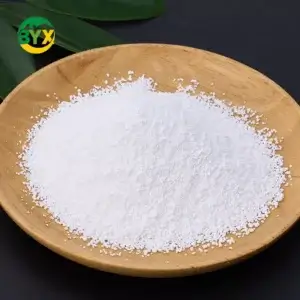
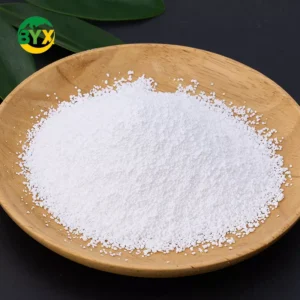
Baiyexin is the largest Magnesium Sulfate Monohydrate manufacturer in China, providing Magnesium Sulfate Monohydrate in various specifications.
Product SKU: BYX50477
Product Brand: BAIYEXIN
Product Currency: USD
Product Price: 210
Price Valid Until: 2026-12-31
Product In-Stock: InStock
5
BaiYeXin –
Customers have a very high level of recognition for Baiyexin's high-purity Magnesium Sulfate Monohydrate, and our repurchase rate has also increased.