
Description
This article offers an in-depth analysis of the key factors influencing magnesium sulfate heptahydrate prices, global market trends, and the latest price references and procurement strategies to support informed business decisions.
Magnesium sulfate heptahydrate (chemical formula: MgSO₄·7H₂O), commonly known as Epsom salt, is an important inorganic compound widely used in agriculture, industry, and pharmaceuticals. Understanding its market price is crucial for procurement managers in fertilizer plants, agricultural input distributors, and raw material traders.
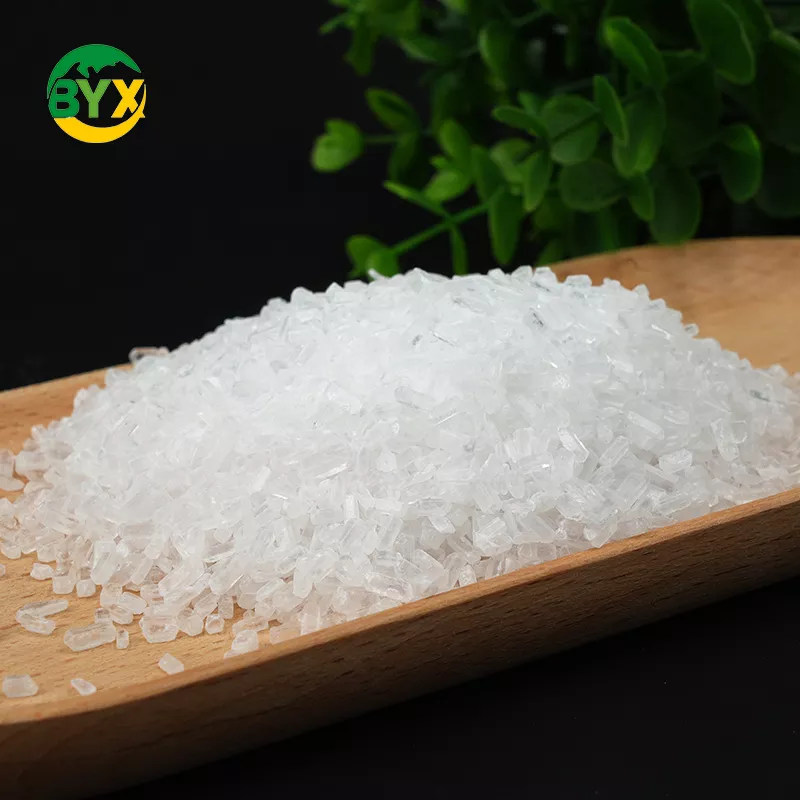
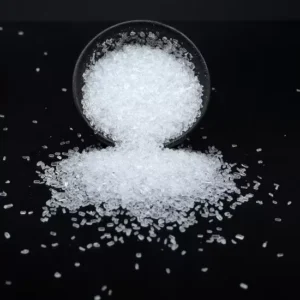
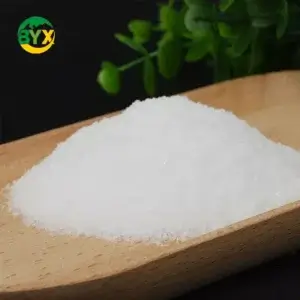
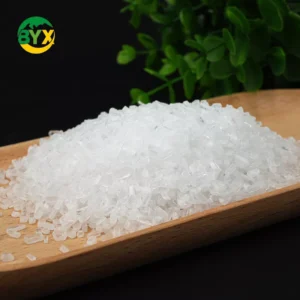
Magnesium Sulfate Heptahydrate
Magnesium Sulfate Heptahydrate
Magnesium Sulphate Heptahydrate Detail Show :
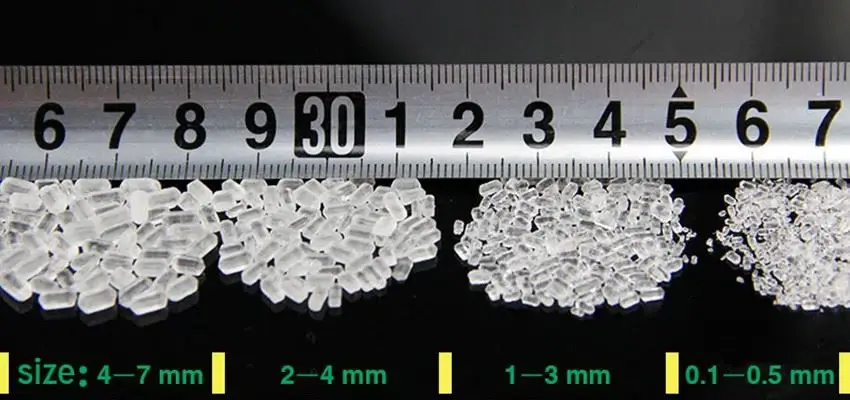
Core advantages:
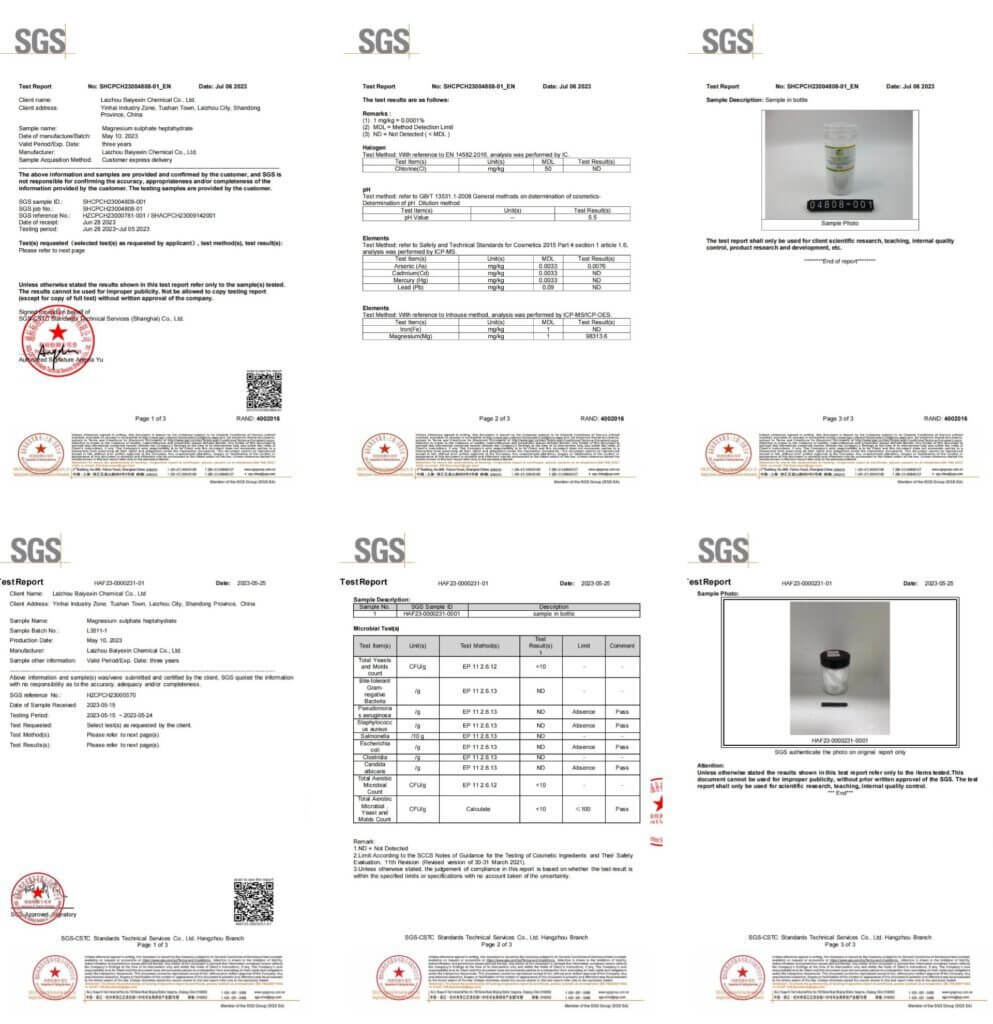
The company BAIYEXIN produces magnesium sulfate heptahydrate to achieve product purity grades above 99.8% while keeping impurity levels below 0.1%, which customers can use as a trustworthy assurance for their manufacturing operations and scientific research activities. The company applies ISO9001 quality management system requirements to its production process, which includes 36 testing procedures for every product batch to guarantee consistent product performance.
The company offers products in various mesh sizes and particle sizes to meet customer requirements, which will enable proper dispersal and chemical activity during their intended use.
Magnesium Sulphate Heptahydrate Examining Report:
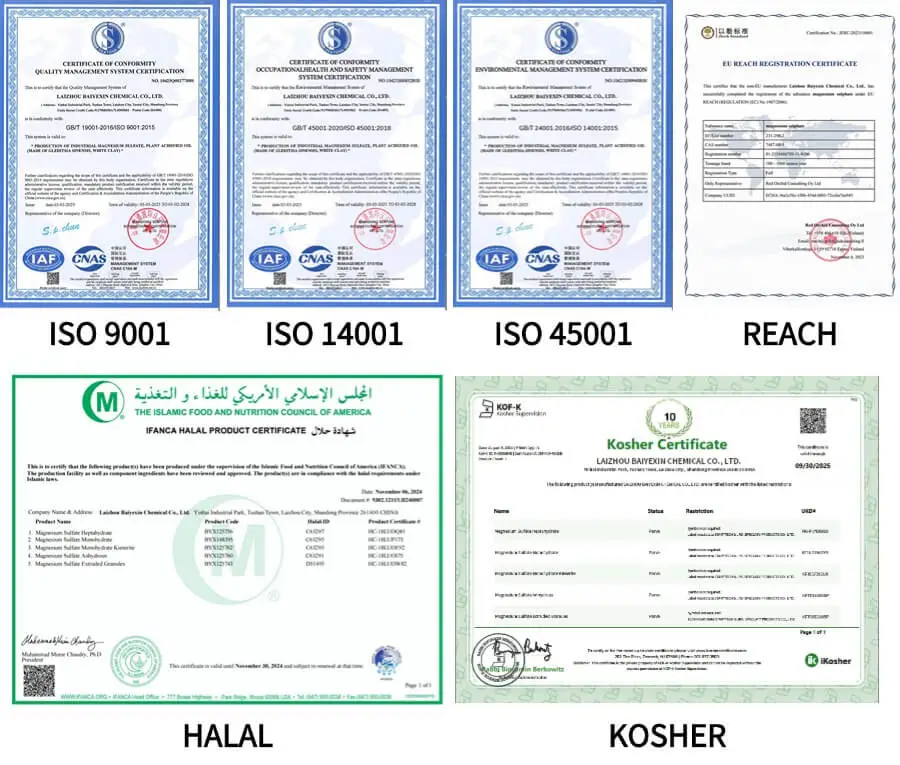
Certification:
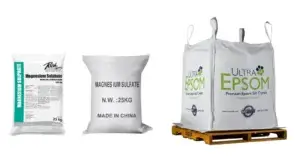
Packaging options offered by Baiyexin:
Baiyexin offers different packaging choices to fit customer needs.
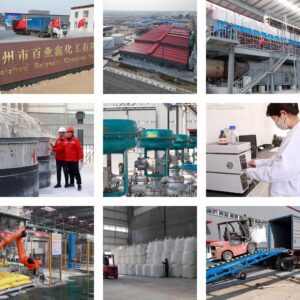
Factory Picture:
Laizhou Baiyexin Chemical Co., Ltd. was established in 2022. Headquartered in the Yinhai Industrial Zone, the company boasts total assets of RMB 300 million and is recognized as a world-leading modern magnesium sulfate heptahydrate manufacturers.
Overview of Current Magnesium Sulfate Heptahydrate Market Prices
The data from ICIS 2024 shows that international magnesium sulfate heptahydrate prices range between USD 120 and USD 280 per ton with CNF terms based on three different purity levels (industrial and fertilizer and pharmaceutical) and the minimum order quantity which starts at 20 tons.
The Chinese market shows ex-factory industrial-grade magnesium sulfate heptahydrate prices which reach CNY 500 to CNY 950 per ton (about USD 70 to USD 130 per ton) for 95 to 99 percent purity and CNY 450 to CNY 900 per ton (about USD 60 to USD 130 per ton) for fertilizer agricultural-grade material which has 89 to 95 percent purity. The market price for food-grade magnesium sulfate heptahydrate (which has 95 to 99 percent purity) ranges from CNY 700 to CNY 1,250 per ton (which equals approximately USD 98 to USD 176) while pharmaceutical-grade products can exceed CNY 2,000 per ton (which equals approximately USD 280 per ton).
The magnesium sulfate heptahydrate prices in Europe and the Americas reach 1.5 to 2 times higher than Chinese prices because of differences in logistics and regulatory matters. The price differences create complicated decision-making situations for procurement managers at fertilizer plants and distributors of agricultural inputs.
2024 Global Magnesium Sulfate Heptahydrate Price Trends
The global magnesium sulfate heptahydrate market showed price stability during 2024, yet different regions exhibited distinct pricing patterns. The industry reports show that worldwide pricing ranges from USD 200 to USD 500 per ton based on the product specifications and purity level and the packaging and shipping conditions.
China Market: The world market uses Chinese export prices as its price reference because China holds the position of top global producer and exporter. The Chinese market faces higher competition which leads to lower prices than European and American markets. Export prices which distributors determine at Free On Board (FOB) locations depend on shipping expenses and currency exchange rates that lead to typical costs between USD 90 to 130 per ton for fertilizer-grade products.
India Market: India ranks as a top market because it uses magnesium sulfate heptahydrate mainly for agricultural purposes. Indian prices depend on Chinese supply while domestic production and import tariffs determine price movements which range between USD 120 and USD 160 per ton.
European and American markets charge higher prices for industrial and food-grade products because their standards require better product purity and quality. The stable supply-demand relationship maintains magnesium sulfate heptahydrate prices within a narrow range that extends from USD 140 to USD 180 per ton.
Key Factors Influencing Magnesium Sulfate Heptahydrate Prices
The prices of magnesium sulfate heptahydrate experience fluctuations because multiple factors determine their market value. The ability to forecast price movements and manage expenses requires knowledge of these elements.
Purity Grades and Specification Differences
The primary element which determines price changes in products is their purity level. The prices of agricultural-grade products which have 98 to 99.5 percent purity and industrial-grade products which have 99 to 99.5 percent purity and food-grade products which serve as nutritional fortification and brewing additives and pharmaceutical/high-purity reagent-grade products will increase in price according to their respective purity levels. The production of higher-purity products requires manufacturers to implement advanced production methods together with rigorous quality assurance procedures which results in increased operational expenses.
The suspended heavy metal limits which food-grade and pharmaceutical-grade products must meet to pass testing require lead content to remain below 0.0001% which results in higher product costs compared to industrial-grade items. Granular products typically command a 10–15% premium over powdered forms due to ease of transportation and storage.
Raw Material and Production Costs
Magnesite mining expenses determine the pricing of magnesium sulfate heptahydrate. The global price of magnesite increased by 6% in 2024 because Chinese regions such as Inner Mongolia and Shandong experienced production capacity reductions from their environmental regulations. The production expenses of our business experience major effects from changes in natural gas and electricity prices which account for 20 to 30 percent of our total energy expenses.
Supply-Demand Dynamics and Market Cycles
Price fluctuations in agricultural markets depend on agricultural demand as their primary determinant. In 2024, climate anomalies in major global grain-producing regions increased demand for soil-improving magnesium sulfate by 12%. The paper and textile industries maintain their steady demand, but the pharmaceutical sector requires Epsom salt at a growing annual rate of 8%. Supply and demand patterns show strong seasonal changes because the first quarter experiences low demand and decreased prices while the third quarter reaches its highest prices because of the agricultural fertilization period.
Policy and Trade Factors
China's enhanced environmental regulations for 2024 established higher compliance requirements which resulted in the shutdown of about 15 percent of small-scale magnesium sulfate production facilities while driving up market prices. The European Union's REACH regulations create stringent import requirements for chemicals which result in higher export expenses that subsequently drive up regional market prices.
Transportation and Logistics Costs
Transportation costs create a major impact on price determination for markets that rely on imported goods. The 2024 international shipping costs show a small decrease from 2023 yet they remain 30% above the shipping costs that existed before the pandemic. Container shipping costs from China to Europe account for 25–35% of FOB prices, which results in increased end-market prices for products sold in Europe and the Americas.
Supplier Magnesium Sulfate Heptahydrate Price Comparison Table (Example)
The table below shows recent magnesium sulfate heptahydrate prices which different suppliers across various regions. The table provides a reference to compare prices. The data is based on public market reports. Please verify actual transaction prices using real-time quotes.
| Region/Supplier | Grade | Purity | Price (USD/ton) | MOQ (tons) | Notes |
|---|---|---|---|---|---|
| China (Supplier A) | Fertilizer | 89–95% | 60–130 | 20 | FOB price, bulk packaging |
| China (Supplier B) | Industrial | 95–99% | 70–130 | 20 | Granular premium applies |
| India (Supplier C) | Fertilizer | 90–95% | 120–160 | 50 | Includes import tariffs |
| Europe (Supplier D) | Food-grade | 95–99% | 140–180 | 10 | Meets EU standards |
| USA (Supplier E) | Pharmaceutical | ≥99.5% | 280+ | 5 | USP-compliant |
Bulk Procurement Strategies
- The first quarter of the low-demand season requires companies to establish their base inventory needs for the entire year to obtain price reductions between 5 percent and 10 percent.
- Orders that exceed 100 tons provide customers with access to 10 percent to 15 percent discounts.
- Large fertilizer plants can consider quarterly tender procurement.
- Companies can strengthen their negotiating position with suppliers through the simultaneous purchase of industrial products and agricultural-grade products.
- The establishment of annual framework contracts with suppliers enables companies to maintain price stability throughout the contract duration.
Quality Inspection Standards
When procuring, focus on the following metrics:
- Main Content (MgSO₄·7H₂O): agricultural-grade requires 98% content, industrial-grade requires 99% content and pharmaceutical-grade requires 99.5% content.
- The Total lead and arsenic and cadmium content must remain below 0.001% according to pharmaceutical-grade standard.
- Request third-party testing reports for each batch and retain samples for verification.
- Pharmaceutical-grade: materials must meet USP/BP/FCC standards requirement.
Supplier Selection Tips
- The qualification verification process requires you to give priority to manufacturers who possess both ISO9001 certification and environmental production permits.
- The capacity assessment shows that suppliers with yearly production capabilities exceeding 5000 tons will provide their customers with reliable delivery service.
- The assessment of logistics capabilities requires an examination of suppliers' warehousing facilities and transportation systems, which should particularly focus on their service to distant locations.
- The selection process requires that suppliers must have more than three years of experience in their field and demonstrate total success in delivering quality work without any significant quality issues.
- The production reserves and alternative production plans should be shared with you because they serve as essential components for maintaining supply chain stability through your business operation.
Main Applications of Magnesium Sulfate Heptahydrate
Agricultural Applications
Magnesium sulfate heptahydrate serves multiple purposes in agriculture because it functions as a fertilizer which provides magnesium to plants while maintaining proper soil pH levels. The product acts as a foliar fertilizer which improves photosynthesis in fruit trees and vegetable crops. The product functions as a fertilizer additive which helps balance nutrients throughout compound fertilizers.
The cost of agricultural-grade magnesium sulfate fertilizer remains low because it sells between CNY 450 and 900 per ton which equals approximately USD 60 to 130 per ton in 2024. The product represents less than 3 percent of total agricultural expenses yet it can increase crop production between 5 and 15 percent.
Industrial Applications
The industrial applications of magnesium sulfate heptahydrate include the following uses. The paper industry uses it as a pulp bleaching agent which also strengthens their products. The textile industry uses it to dye fiber and to create textile weight. The leather industry uses it as a tanning agent and as a material to fill spaces. The construction industry uses it as an essential ingredient of magnesium oxychloride cement production.
The production of industrial-grade items needs materials with purity levels of at least 99 percent. The price of magnesium sulfate heptahydrate will range from CNY 500 to CNY 950 per ton in 2024 according to different industry requirements which affect price variation.
Pharmaceutical Applications
Pharmaceutical-grade magnesium sulfate (Epsom salt) serves multiple purposes which include:
Anticonvulsant: Treating preeclampsia and eclampsia. Laxative: Oral use for constipation relief. Topical Use: Relieving muscle pain and inflammation.
The high costs of pharmaceutical-grade products arise from their strict quality standards which require manufacturers to spend more than 2024 market prices of CNY 2,000 per ton (approximately USD 280 per ton). These products must comply with pharmacopoeia standards and manufacturers require GMP certification.
Future
Magnesium Sulfate Heptahydrate Price Predictions and Industry Recommendations
2025 Magnesium Sulfate Heptahydrate Price Trend Forecast
The current market conditions will determine the magnesium sulfate heptahydrate price trends which will develop until 2026.
Short-Term (1–3 months) The system will maintain its current state despite experiencing minor changes which will not exceed five percent.
Mid-Term (6 months) The energy costs together with environmental policies will create a 5 to 8 percent price increase for the period.
Long-Term (1 year) The prices will increase between 10 and 15 percent if global economic recovery exceeds current expectations.
The main danger elements of the situation include stricter Chinese environmental regulations, rising global energy costs, and interruptions in the supply chain.
Industry Recommendations
For Fertilizer Plant Procurement Managers:
- Establish a multi-regional supplier network which protects against supply chain risks that occur when all suppliers operate from a single geographical area.
- The company should establish pricing contracts which operate on a quarterly basis to secure their essential purchasing quantities.
- The organization needs to track agricultural policy modifications which influence market demand.
For Raw Material Traders:
- Increase port storage facilities to improve market opportunities which arise from regional price differences.
- Create high-value product lines which include pharmaceutical-grade magnesium sulfate as a main product.
- The establishment of price alert systems will enable businesses to modify their stock management procedures in real time.
For Agricultural Input Distributors:
- Educate farmers about scientific methods which demonstrate the efficacy of magnesium sulfate fertilizers to increase their demand for these products.
- We provide tailored magnesium fertilizer solutions which match the specific soil requirements of different regions.
- The company will establish direct supply relationships with manufacturers to achieve cost savings by eliminating between their direct supply sources and their production facilities.
Magnesium Sulfate Heptahydrate Price FAQs
How much does magnesium sulfate heptahydrate cost per ton?
The pricing for products depends on their grade and geographical location and the quantity that customers order. The industrial-grade product in China (which has 95 to 99 percent purity) sells at ex-factory prices between CNY 500 and CNY 950 per ton (which equals approximately USD 70 to USD 130 per ton). The fertilizer/agricultural-grade product (which has 89 to 95 percent purity) sells at CNY 450 to CNY 900 per ton (which equals approximately USD 60 to USD 130 per ton). Food-grade products (which have 95 to 99 percent purity) sell between CNY 700 and CNY 1,250 per ton (which equals approximately USD 98 to USD 176 per ton). The pharmaceutical-grade products sell at prices that exceed CNY 2,000 per ton (which equals approximately USD 280 per ton).
What is the price difference between monohydrate and heptahydrate magnesium sulfate?
The transportation and storage expenses for monohydrate magnesium sulfate (MgSO₄·H₂O) decrease because it contains less water (which accounts for approximately 13% of its total weight) and its cost is 30% to 50% higher than the price of heptahydrate magnesium sulfate.
Will magnesium sulfate heptahydrate prices rise in the future?
The 2025 pricing forecast predicts that prices will increase because of stricter environmental regulations and higher energy expenses which will create cost increases between 5% and 15% based on worldwide economic and supply chain factors.
How to assess the quality of magnesium sulfate heptahydrate?
The evaluation needs to determine three aspects which include purity (the standard range is 98 to 99.5 percent) and solubility and the visual characteristics of white crystalline material and the measurement of heavy metal contamination.
Where can reliable magnesium sulfate heptahydrate suppliers be found?
The industry trade shows together with B2B platforms and market reports and direct contact with established manufacturers serve as dependable sources for obtaining trustworthy suppliers.
What factors could cause a short-term spike in magnesium sulfate heptahydrate prices?
The magnesium sulfate heptahydrate price increase occurs because of two factors. The first factor includes sudden increases in raw material costs. The second factor consists of tightened environmental policies. The third factor encompasses regional supply-demand discrepancies which occur when essential production zones experience disruptions. Market speculation serves as the fourth factor which leads to price surges.
Magnesium Sulfate Heptahydrate Price -BAIYEXIN
Gain an in-depth understanding of magnesium sulfate heptahydrate price fluctuations, including price range per ton, applications, and supplier comparisons.
Product SKU: BYX404882
Product Brand: BAIYEXIN
Product Currency: USD
Product Price: 90
Price Valid Until: 2026-12-31
Product In-Stock: InStock
5

BaiYeXin –
After three years of collaboration, the crystal purity of magnesium sulfate heptahydrate has remained consistently above 99.5%.